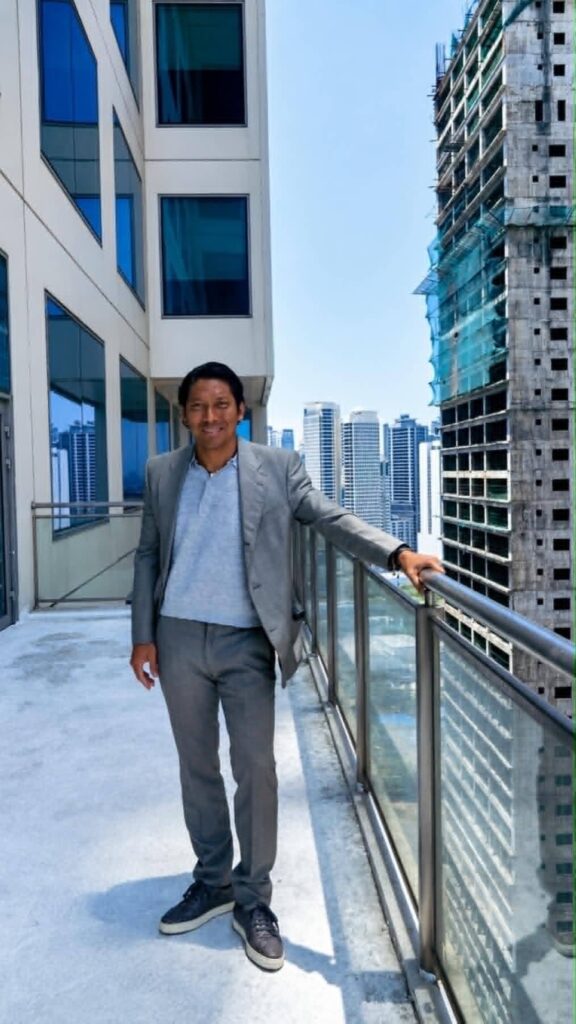
CEBU CITY — Filipino real estate entrepreneur Robbie Antonio is broadening his development strategy beyond luxury residential projects as he positions his business for what he sees as the next phase of Philippine urban growth.
Antonio said future investments will cover a wider range of sectors, including luxury residences, resorts, hotels, retail spaces, affordable housing, offices, industrial developments, and data centers.
The shift comes as the property sector adapts to changing market conditions, with developers exploring opportunities in logistics, digital infrastructure, and commercial assets alongside traditional residential projects.
“The next stage of Philippine real estate will be defined by assets that create lasting economic value,” Antonio said.
“Buildings should do more than occupy space. They should shape communities, remain relevant over time and respond to how people and businesses evolve,” he added.
Antonio built his reputation through design-focused and branded residential developments in the Philippines and abroad.
His projects include The Centurion in Manhattan, New York, developed with architect I.M. Pei; Essensa East Forbes in Bonifacio Global City; The Milano Residences with Versace Home; Acqua Private Residences’ Livingston Tower with Missoni Home and Iguazu Tower with YOO by Starck; and Century Spire in Makati, which features interiors by Armani/Casa and architecture by Daniel Libeskind.
While design remains a central part of his approach, Antonio said the next investment cycle requires developers to consider sectors that support broader economic expansion.
“There are easier ways to build but I’ve seen what happens when you begin with clarity, work with the best people in their fields and create developments that can stand the test of time,” he said.
Antonio said industrial facilities, digital infrastructure, hospitality projects, and integrated communities will become increasingly important as the economy grows.
“The opportunity is no longer confined to residential developments,” he said.
“Industrial facilities, digital infrastructure, hospitality and integrated communities will become increasingly important as the Philippine economy expands,” he added.
The Philippines has been seeing increased demand for infrastructure-related real estate amid continued investments in transport, logistics, manufacturing, and technology.
The government’s “Build Better More” program and public-private partnership initiatives have also opened opportunities for private developers to participate in large-scale projects.
The growth of artificial intelligence, cloud computing, and digital services has also increased interest in data centers, which have become an emerging segment in the country’s property market.
Antonio said his strategy is focused on sectors that can benefit from long-term trends such as urbanization, industrialization, and technological transformation.
“Real estate is ultimately a long-term business The challenge is to build assets that retain value, respond to genuine demand and contribute to the long-term growth of cities,” Antonio said.
Over more than three decades in the industry, Antonio has been involved in 93 developments covering more than 71 million square feet of gross floor area.
His portfolio includes 33 high-rise projects and 26 residential communities that delivered more than 17,700 condominium units.
He said his experience in branded developments provides a foundation for entering new segments while maintaining a focus on projects that create lasting value.
Antonio’s expansion comes as the Philippines seeks to strengthen its position as a regional manufacturing and technology hub through investments in semiconductors, artificial intelligence infrastructure, logistics networks, and industrial corridors.
He said future developments will continue to combine design, market demand, and strategic partnerships to support the evolving needs of Philippine cities.