The top six installations and exhibitions to see at Design Miami/Basel 2016

by Rima Sabina Aouf, Dezeen

Design Miami/Basel 2016: this year’s Design Miami/Basel fair opens today in the Swiss city, where a six-tonne stone meditation space, a modular armadillo and designs by Zaha Hadid are among the highlights.

The collectible design fair is taking place from 14 to 19 June 2016, and will provide an opportunity to browse creative furniture and fanciful objets d’art presented by international galleries.

Many of the must-sees at the event come from the Design at Large programme of installations, this year curated by founder and editor-in-chief of Cabana Magazine, Martina Mondadori Sartogo, and themed around nature.

New exhibition platform Design Curio also promises interesting displays. Based on traditional cabinets of curiosity, it features assemblages of objects put together by designers, curators, innovators and gallerists.

Here are our picks of installations and displays that shouldn’t be missed:


Owan by Kengo Kuma

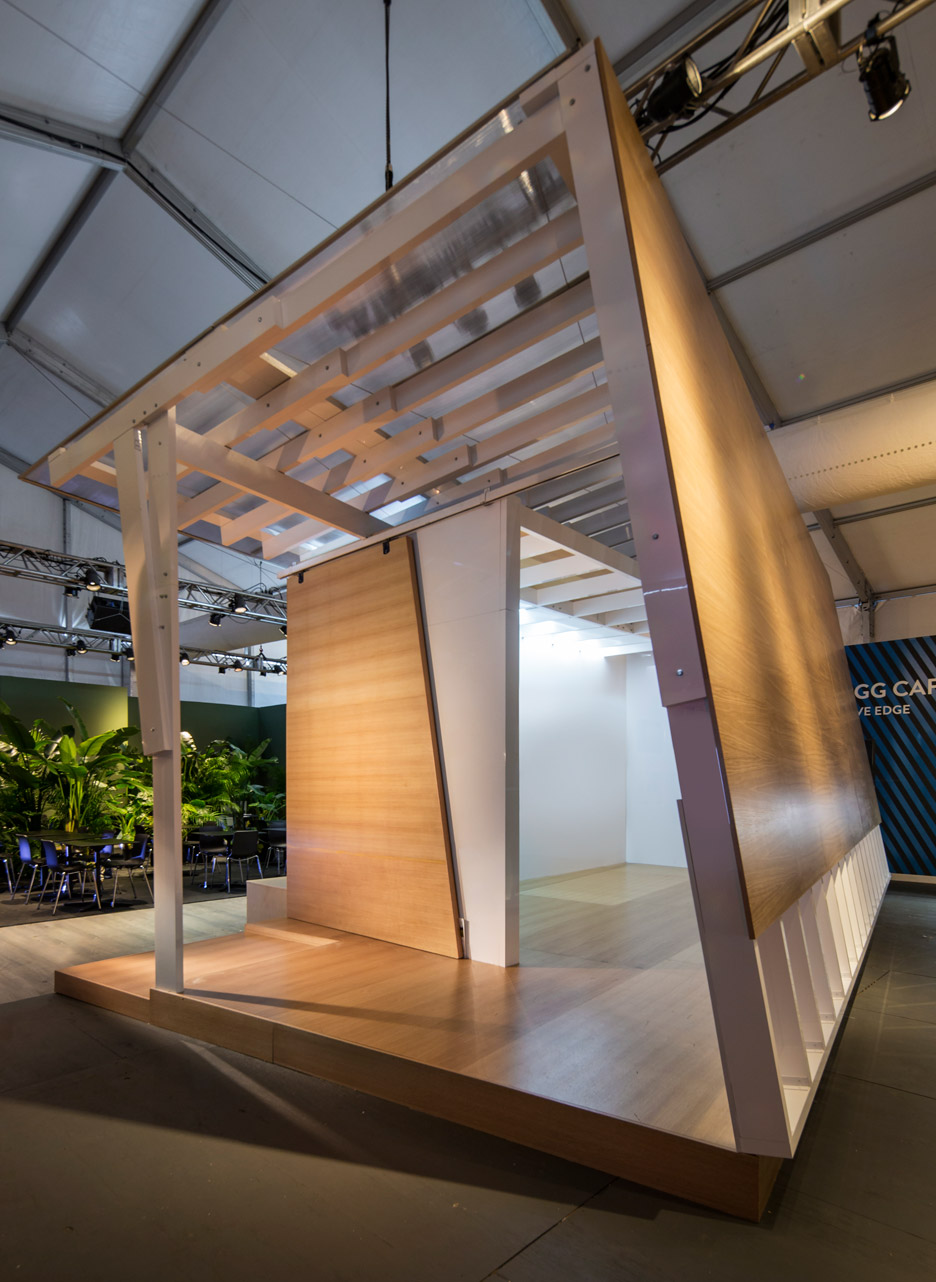
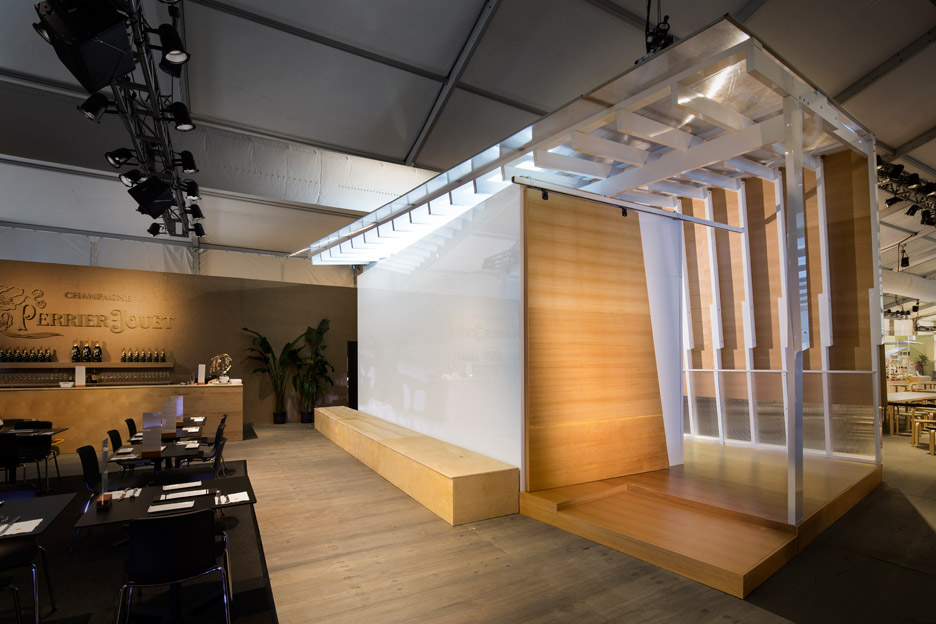
Taking inspiration from Japanese tea bowls and fish scales, architect Kengo Kuma‘s metal screen installation is intended to be an indoor and an outdoor space at once. While the structure’s thin metal shell looks like it offers little protection from the elements, it is actually lined with a waterproof membrane.

Called Owan, the structure is made from a metal referred to as a “memory alloy”, which means it can be bent into new forms when heated.

Designed to be movable, the installation is part of Galerie Philippe Gravier’s Small Nomad House Project, which also includes Kuma’s wooden pavilion from last year’s FIAC event in Paris and a stacked-box pavilion by fellow Japanese architect Sou Fujimoto.


Maxéville Design Office by Jean Prouve

A demountable office by French architect Jean Prouvé that was until recently being used as a swingers’ club has been restored for display at Design Miami/Basel.

The structure, now known as the Maxéville Design Office, began life in 1947 at the historic Ateliers Jean Prouvé in Maxéville and is being presented by the Galerie Patrick Seguin, frequent champions of Prouvé’s work.

While other Prouvé creations at the site were destroyed after his departure from the company in 1953, this one remained concealed behind cladding and over time served as the atelier’s design office, a plumber’s office, a restaurant and finally a swingers’ club called Le Bounty. Find out more about Jean Prouvé’s Maxeville 35 demountable office »


Civilized Primitives by Kiki Van Eijk

Each of the objects in Kiki van Eijk‘s new furniture collection is modelled on branches found in the forests surrounding the Dutch designer’s Eindhoven home, and cast in bronze.

From an A-frame daybed of intersecting sticks to a tall and gnarled candelstick holder, each is based on branches that have been sanded on three sides and left textured on the last – giving rise to the “civilized” and “primitive” aspects of the collection’s title.

As part of the Design at Large program, the collection is displayed in an outdoor Bedouin-style tent, created using the large-scale printing processes of Dutch company Exposize. Van Eijk’s Physical Interaction light sculptures, which are turned on through unusual interactions like blowing on a mobile or lighting a flint, are also on show inside.


Zaha Hadid design exhibition

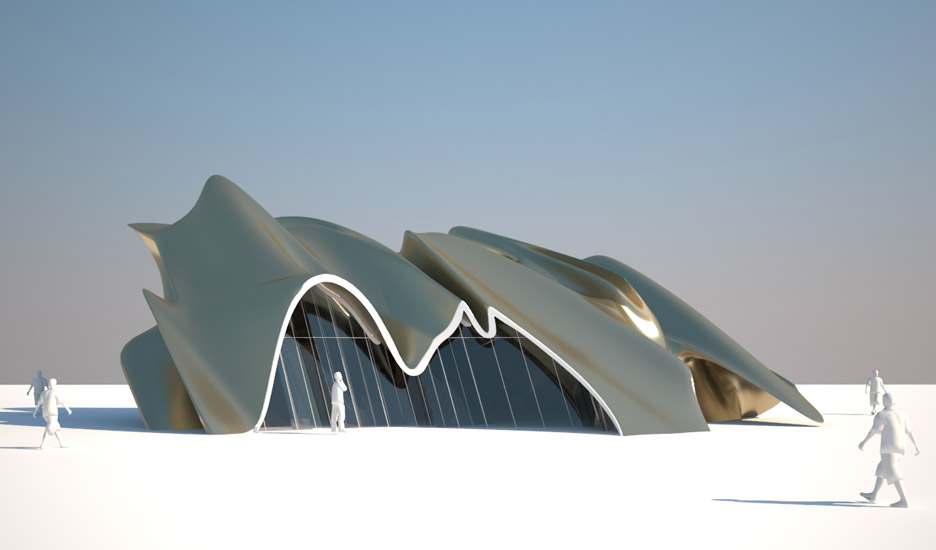
The late Zaha Hadid may be best known for her architecture, but her fluid forms also translated into some memorable design objects, which are now the focus of an exhibition during Design Miami/Basel.

Included in the display is her Liquid Glacial range of acrylic stools and tables, designed to resemble ice formations, as well as her Valle shelves in slashes of black granite.

The exhibition has been put together by her firm, Zaha Hadid Architects, to commemorate her contribution to the field of design following her unexpected death earlier this year.


Stone Tea House Meditative Alcove by Masatoshi Izumi and Koichi Hara

Last month, Vietnamese architect Vo Trong Nghia said he makes his staff meditate every day to help them “resist cravings and improve concentration”, after he installed a space for relaxing activity at the Venice Architecture Biennale.

The trend has continued at Design Miami/Basel, which is hosting a hulking but hollow stone cube called the Stone Tea House Meditative Alcove by Japanese sculptors Masatoshi Izumi and Koichi Hara.

Weighing in at six tonnes, minus the 18 tonnes of stone carved out from its middle, it is intended to provide a sanctuary from the busy world beyond. The installation sits within the natural surrounds of a spatial intervention titled In a Silent Space the Landscape is the Sound, designed by Enea Landscape Architecture.


Armadillo Tea Pavilion by Ron Arad


Another calming space is Israeli designer Ron Arad‘s Armadillo Tea Pavilion. Assembled from five moulded wood shells, it resembles the overlapping body armour of an armadillo.

Its components are modular, so it can be configured to suit different spaces, and the shells can be made in a variety of timbers depending on whether it will be used indoors or out.

The Armadillo Tea Pavilion comes from the catalogue of Revolution Precrafted, a company that aims to “democratise high-design and architecture” by providing prefab structures from more than 30 famous designers – including Tom Dixon, Marcel Wanders, Kengo Kuma and Zaha Hadid. It launched its first design at last year’s Design Miami, the sister event of the Basel edition.


— 

Related Links: About Robbie Antonio, Contact

J Mayer H and Fernando Romero launch designs for prefabricated houses

by Amy Frearson, Dezeen

Fernando Romero and Jürgen Mayer H have become the latest architects to contribute to Revolution Precrafted, a prefabricated building service that already offers designs by Zaha Hadid, Sou Fujimoto and Kengo Kuma (+ slideshow).

Revolution Precrafted homes
The Nest Pod by Fernando Romero

Mexico City-based Romero and Berlin architect Mayer H have both designed compact homes for the company, which was launched by developer and art collector Robbie Antonio to make high-end architecture more accessible.

Revolution Precrafted homes
The Nest Pod by Fernando Romero

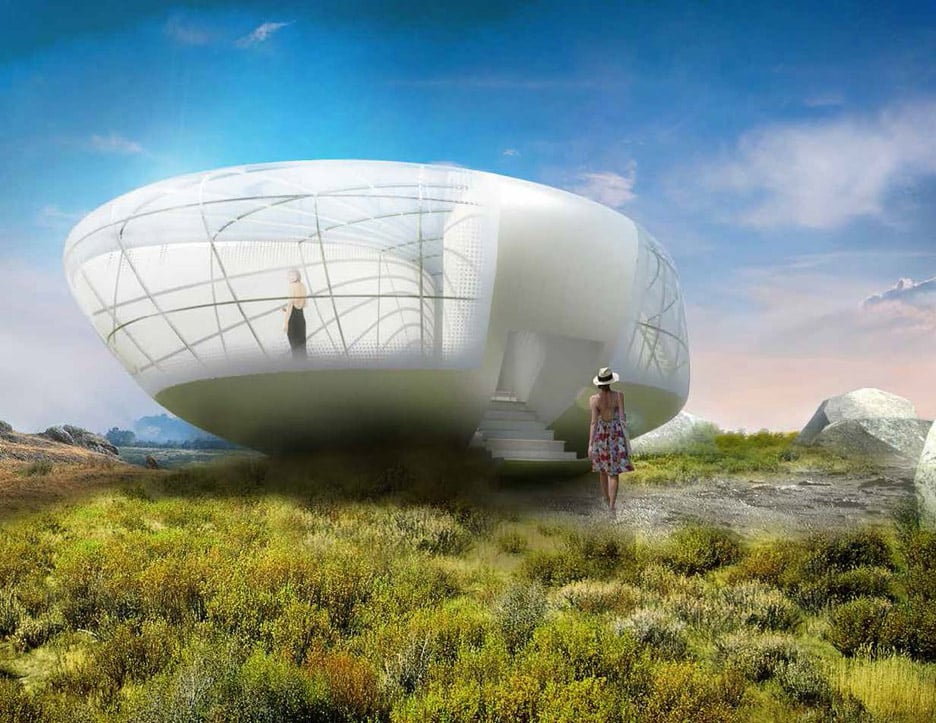
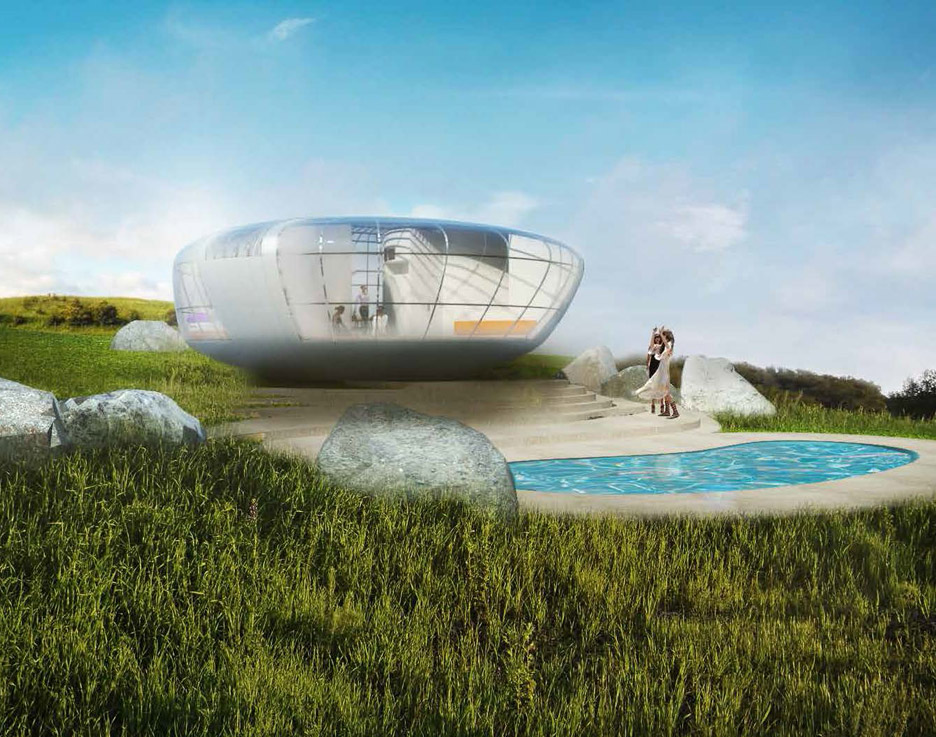
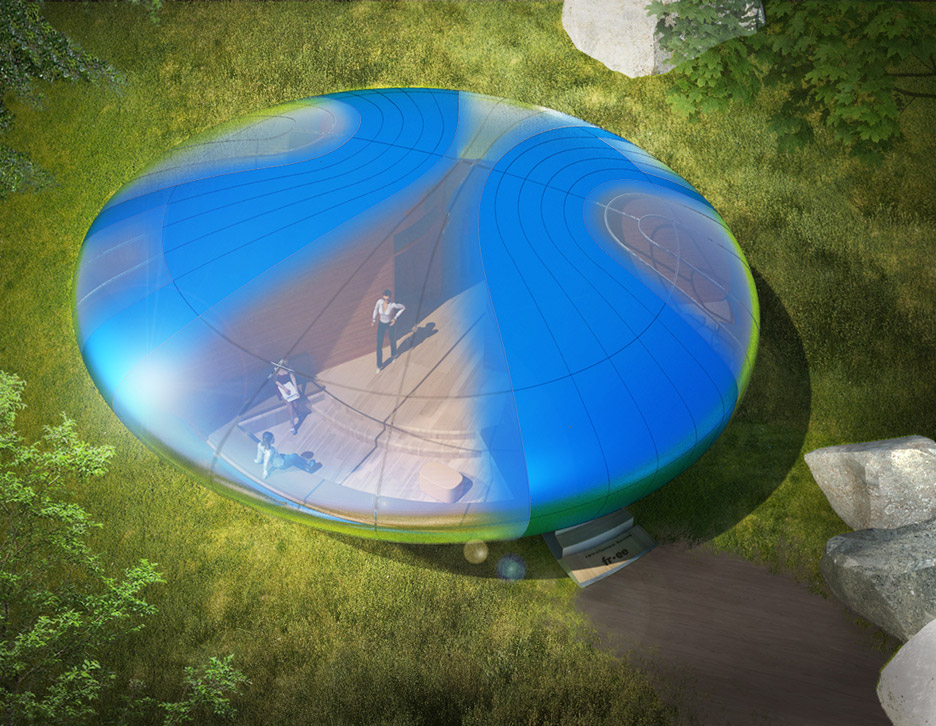
Romero‘s design, named The Nest Pod, is the most unusual of the two new designs. Elliptical in plan, it is intended to be manufactured more like a car or an aeroplane than a house, according to the designer.

Revolution Precrafted homes
The Nest Pod by Fernando Romero

The main floor level is set above ground – a move to prevent the building impacting too much on the landscape beneath it.

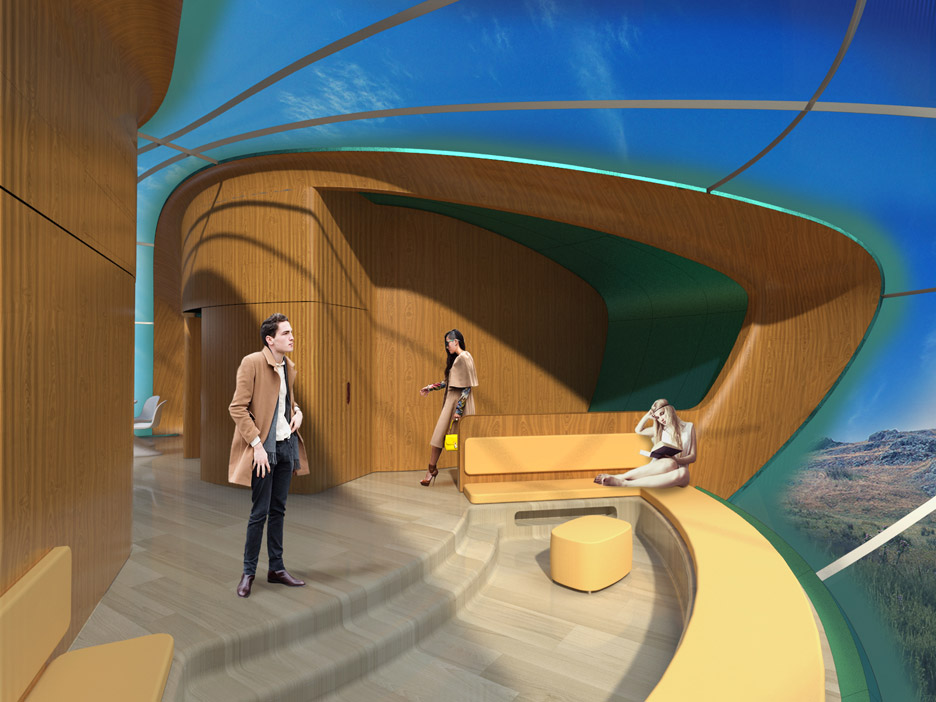
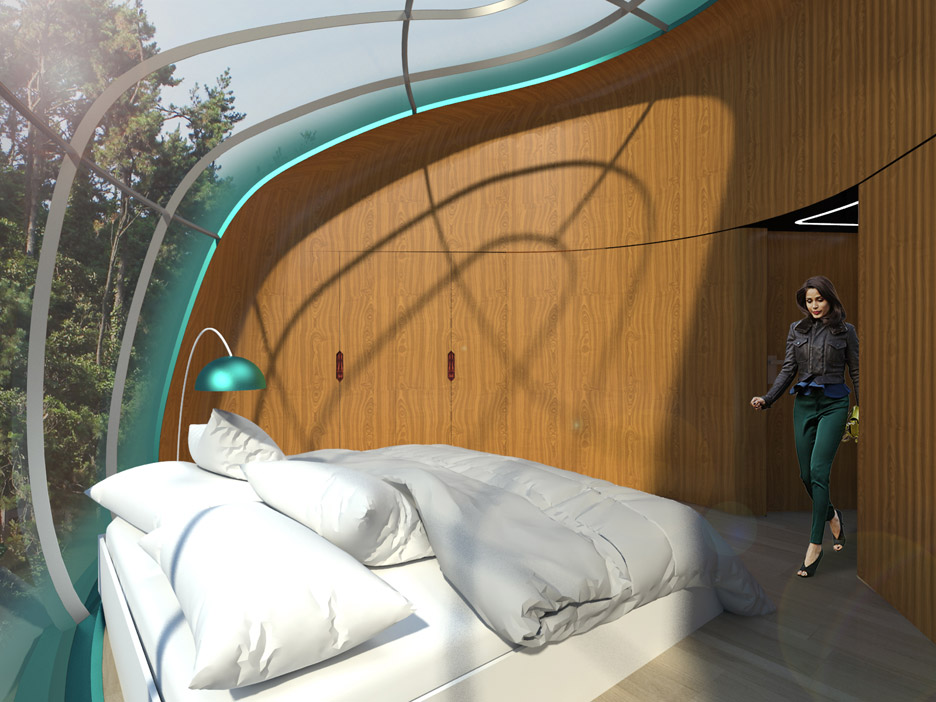
Inside, curved rooms are organised around a north-south axis. They include two living spaces – one for lounging and one for dining – and a pair of bedrooms, creating a total floor area of 95 square metres.

Revolution Precrafted homes
The Nest Pod by Fernando Romero

“The Nest Pod is a pre-crafted home that belongs both to architecture and product design worlds,” explained the FR-EE founder, whose best-known designs include the anvil-shaped Museo Soumaya in Mexico City.

Revolution Precrafted homes
The Nest Pod by Fernando Romero

“We live in a world where mobility became a very important asset, and this house is designed for a new generation of people that can live simultaneously in different parts of the world,” he said.

“It is an innovative prefabricated house, which is intelligently suited for any environment or location. Its elliptical shape allows the building to harmoniously relate to any context.”

Revolution Precrafted homes
The Nest Pod by Fernando Romero

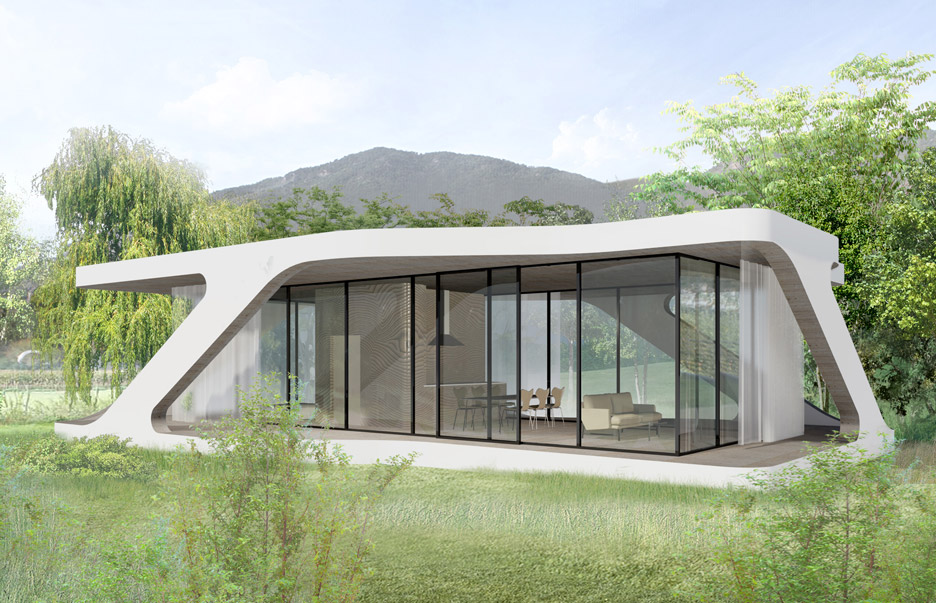
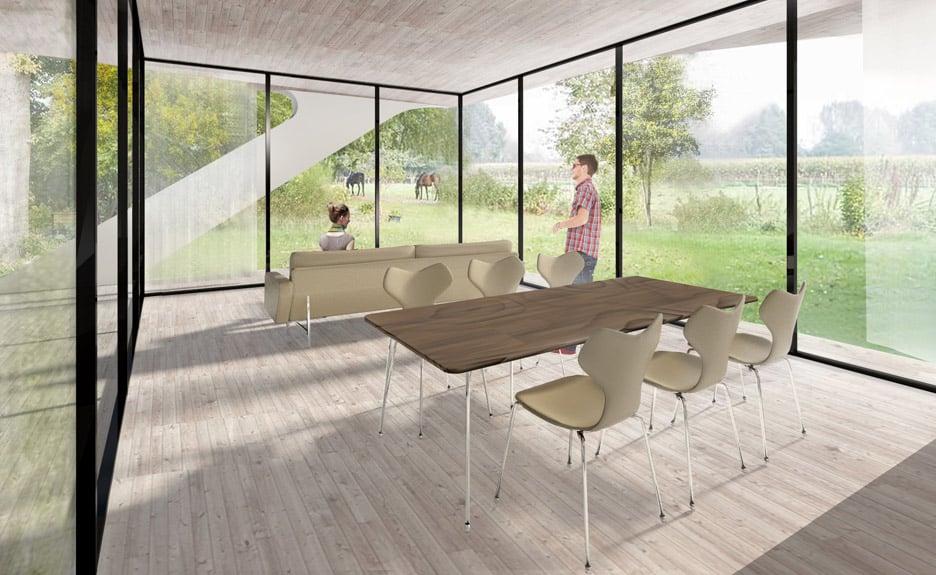
Mayer H’s design meanwhile has a more straightforward rectilinear plan. Its rooms are encased by glass, while an opaque outer structure frames a series of terraces, and also provides shade.

Broad diagonal columns support the overhanging roof, which prompted the name The Diago Home.

Revolution Precrafted homes
The Diago Home by J Mayer H

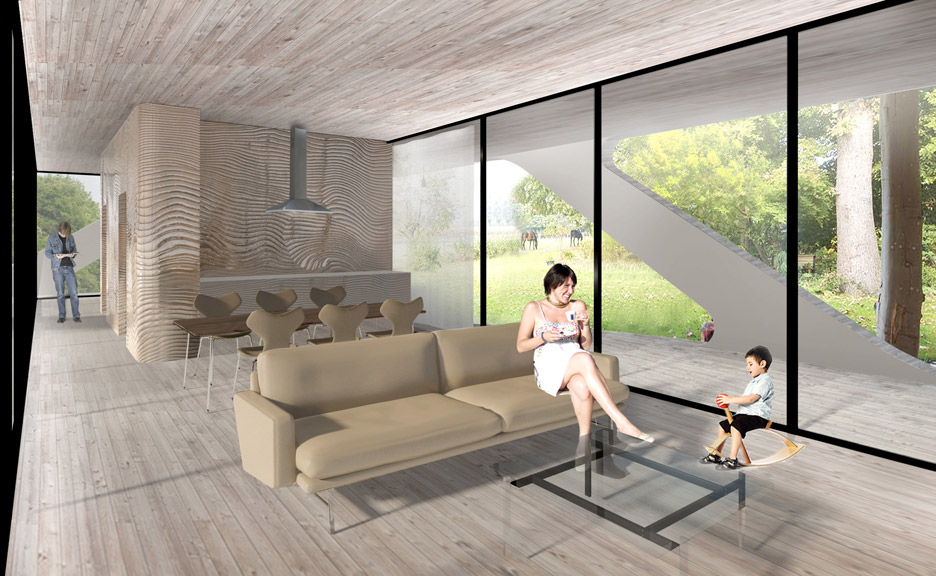
“The Diago Home is a comfortable home with large covered terraces,” said a statement from the architect, who works under the studio name J Mayer H and previously completed the revamp of Seville’s Plaza de la Encarnacíon.

“Floor and ceiling undulate around the enclosed rooms, offering a flexible floor plan with generous outdoor areas,” he added.

Indoor and outdoor curtains will be included, according to the architect, so residents can maintain their privacy.

Revolution Precrafted homes
The Diago Home by J Mayer H

Revolution Precrafted launched during Design Miami 2015, offering prefabricated homes and pavilions by 30 notable architects and designers, also including Tom Dixon, Marcel Wanders, Ron Arad and SelgasCano.

The company aims to harness the benefits of prefabrication, which include low construction costs and build times, to make aspirational architecture more collectible.

Fernando Romero
The Diago Home by J Mayer H

“The core appeal of prefabricated structures is the freedom from location and construction constraints; however, the result is often monotonous, homogenous design,” said the company during the launch.

“Revolution Precrafted Properties reinvent this model by creating unique, high-design spaces that transcend geographic borders and excite the senses.”

Zaha Hadid and Patrik Schumacher unveiled their design for the company at the Design Miami fair – a dining pavilion shaped like an open clam shell.


Related Links: About Robbie Antonio , Contact

Revolution Precrafted recruits famous architects and designers to create prefab homes

by Alan G. Brake, Dezeen

Design Miami 2015: Revolution Precrafted is aiming to “democratise high-design and architecture” with prefab structures by over 30 famous designers including Tom DixonMarcel WandersKengo Kuma and Zaha Hadid.

The new company launched by developer and art collector Robbie Antonio unveiled its first collection of limited-edition designs for prefabricated homes and pavilions during Design Miami last week.

Design-Miami_Prefab-housing_dezeen_sqa
The design for the prefabricated Sphere Greenhouse pavilion, by Japanese architect Sou Fujimoto

Revolution Precrafted aims to harness the benefits of prefabrication, which include low construction costs and build times, to make aspirational architecture more affordable and collectible.

“With a network of cutting-edge technologies and cost-efficient production systems, Revolution is democratising high-design and architecture by introducing designed spaces in exclusive collaboration with industry leading creatives,” said the company.

Design-Miami_Prefab-housing_dezeen_sq
Tom Dixon’s prefabricated house design for Revolution Precrafted is called Block, and uses a scaffolding system that can be infilled with local materials

Among those who have created prefabricated house designs for Revolution Precrafted’s range are LA architect Marmol Radzinger, British designer Tom Dixon, and Dutch designer Marcel Wanders.

SelgasCano, the Spanish architecture studio behind this year’s Serpentine Pavilion, have also designed a house. There is also a design by American painter David Salle in collaboration with New York firm AA Studio, which recently overhauled a building in Tribeca to create a new creative hub.

Prefabricated housing by Marcel Wanders
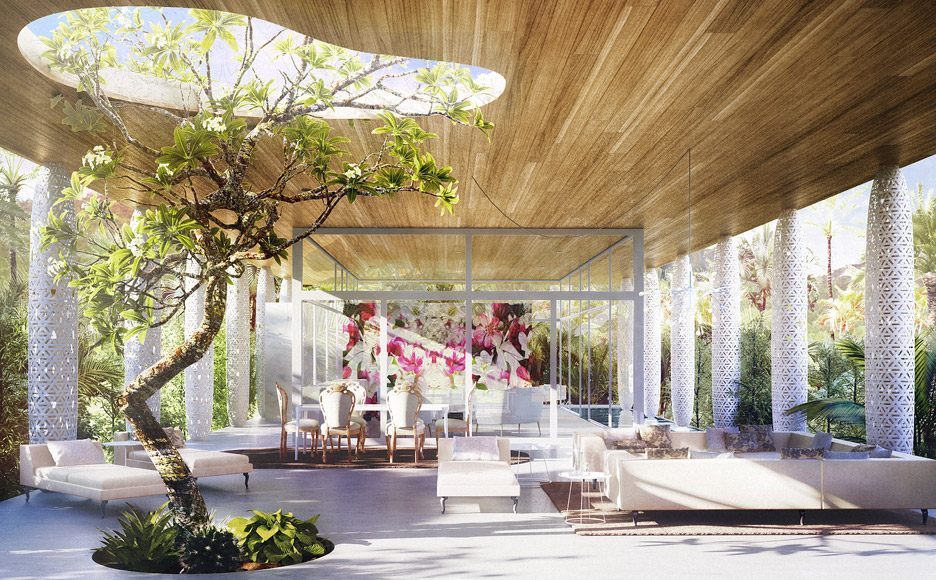
Eden, a prefabricated house design by Dutch designer Marcel Wanders, has glazed walls and a roof supported by fabric-wrapped columns

“The core appeal of prefabricated structures is the freedom from location and construction constraints; however, the result is often monotonous, homogenous design,” said the company.

“Revolution Precrafted Properties reinvent this model by creating unique, high-design spaces that transcend geographic borders and excite the senses.”

Architects Zaha Hadid and Patrik Schumaker, created the Volu Dining Pavilion for the company, which was shown at the Design Miami fair.

Dining pavilion by Zaha Hadid and Patrik Schumacher at Design Miami 2015
Zaha Hadid and Patrick Schumacher’s Volu Dining Pavilion was shown at Design Miami

The clam-shell shaped structure is made from laser-cut and perforated steel surfaces, aluminium box sections and timber loops.

Other pavilion designers include London-based Ron Arad, Japanese architect Sou Fujimoto and Polish-American architect Daniel Libeskind.

Prefabricated housing by David Salle
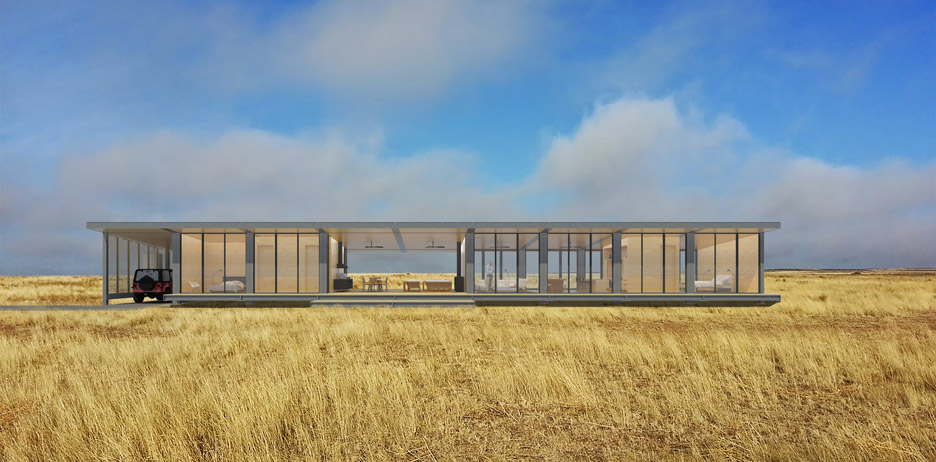
The prefabricated house design by artist David Salle with architects AA Studio also features extensive glazing

There are also pavilions by Brazilian design duo the Campana brothers, Japanese architect Kengo Kuma, German architect Jurgen Mayer H with Wallpaper magazine, LA architect Michael Maltzen, and Amsterdam architecture firm UNStudio.

The pavilions are expected to cost between $35,000 (£23,000) and $450,000 (£296,000), while the houses will start at $250,000 (£164,000), with the most expensive expected to exceed $450,000.

They are designed to be transportable should the owners wish to move them after they have been assembled, and are all between 50 and 250 square metres in size.

Prefabricated housing by David Salle
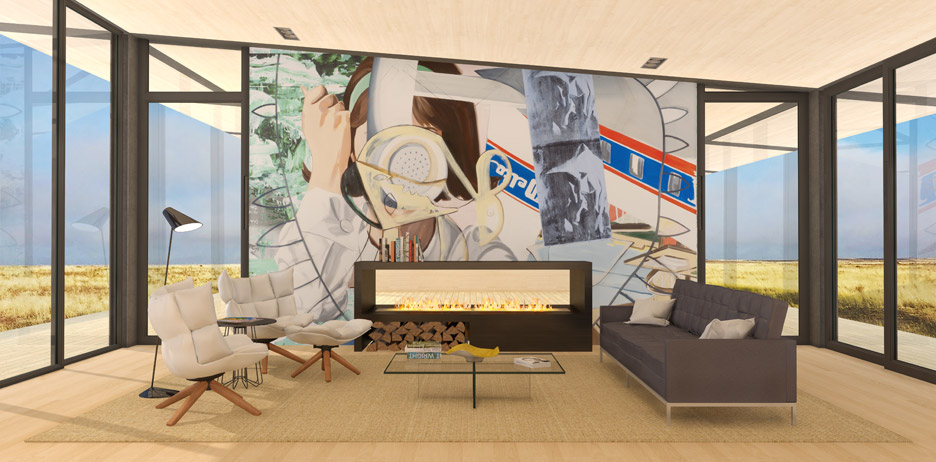
Salle’s own paintings will hang inside his prefabricated house design

Libeskind’s ReCreation Pavilion features a 3D-printed roof, which can be specified in custom colours and textures. According to the architect, the pavilion is intended as a creative refuge.

David Salle and AA Studio’s residence – called the Desert Art House – was inspired by the landscape of West Texas and offers unobstructed views out, with an open-air breezeway that separates the living areas from the bedroom. Two end walls feature digital prints of paintings by Salle.

Prefabricated housing by Daniel Libeskind
Daniel Libeskind’s pavilion will be constructed by 3D printing the roof structure

Wanders’ prefab house is called the Eden Project. It features a large roof covering both indoor and outdoor living areas supported by columns wrapped in synthetic textiles which would be woven by artisans in whatever region the buyer chooses to place the home.

Sphere Greenhouse, by Sou Fujimoto, is designed to hold people and plants with seats that also serve as plant holders. The spherical design is meant to evoke the cosmos, according to Fujimoto.

Gluckman-Tang_Design-Miami-2015_Prefab-housing-company_dezeen_936_1
The Model Art Pavilion by New York architects Gluckman Tang was also displayed at Design Miami

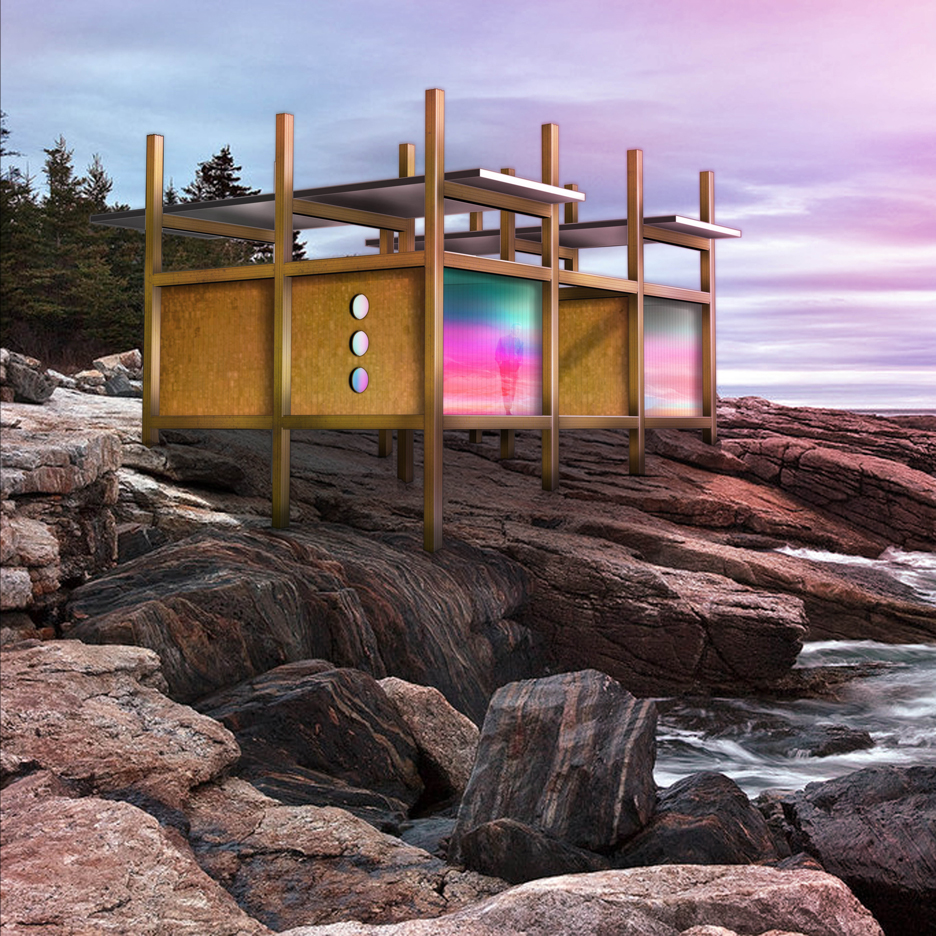
Block by Tom Dixon uses a kit of parts of stilts with metal infill panels. The interiors are covered entirely in cork, creating a contrasting softness compared with the rugged exterior.

The Model Art Pavilion by New York architects Gluckman Tang was also displayed at Design Miami. It is designed to fit in a shipping container and was conceived of as a transportable gallery with a tilted roof to protect the art from direct light.

Originally from the Phillippines, Robbie Antonio, 38,  started off working for his father’s firm Century Properties before founding his own company in New York. He specialises in “super-luxury” developments and collaborations with famous architects and celebrities.

Prefabricated housing by Gluckman Tang
Gluckman Tang’s prefabricated pavilion is designed to fit inside a shipping crate and act as a portable art gallery

He also has a reputation as an art collector and has described his new company’s prefab structures as “bespoke, architectural collectibles”.

Revolution Precrafted intends to introduce additional designs at art and design events throughout 2016.

Architectural pavilions have become a fixture of art and design festivals and fairs. Recent examples include an entry folly made of architectural models at Design Miamia white structure surrounded by curtains in Seoul, South Korea, and a steel and glass kiosk in Paris by the Bouroullec brothers.