
by Luxury


by Luxury

by Amy Frearson, Dezeen
Fernando Romero and Jürgen Mayer H have become the latest architects to contribute to Revolution Precrafted, a prefabricated building service that already offers designs by Zaha Hadid, Sou Fujimoto and Kengo Kuma (+ slideshow).
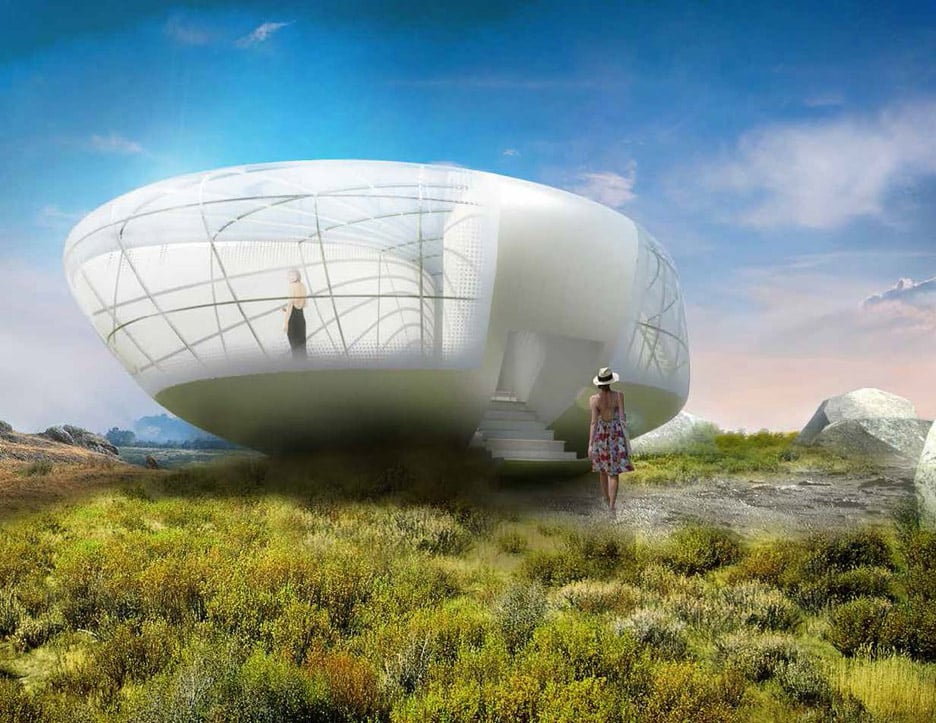
Mexico City-based Romero and Berlin architect Mayer H have both designed compact homes for the company, which was launched by developer and art collector Robbie Antonio to make high-end architecture more accessible.

Romero‘s design, named The Nest Pod, is the most unusual of the two new designs. Elliptical in plan, it is intended to be manufactured more like a car or an aeroplane than a house, according to the designer.
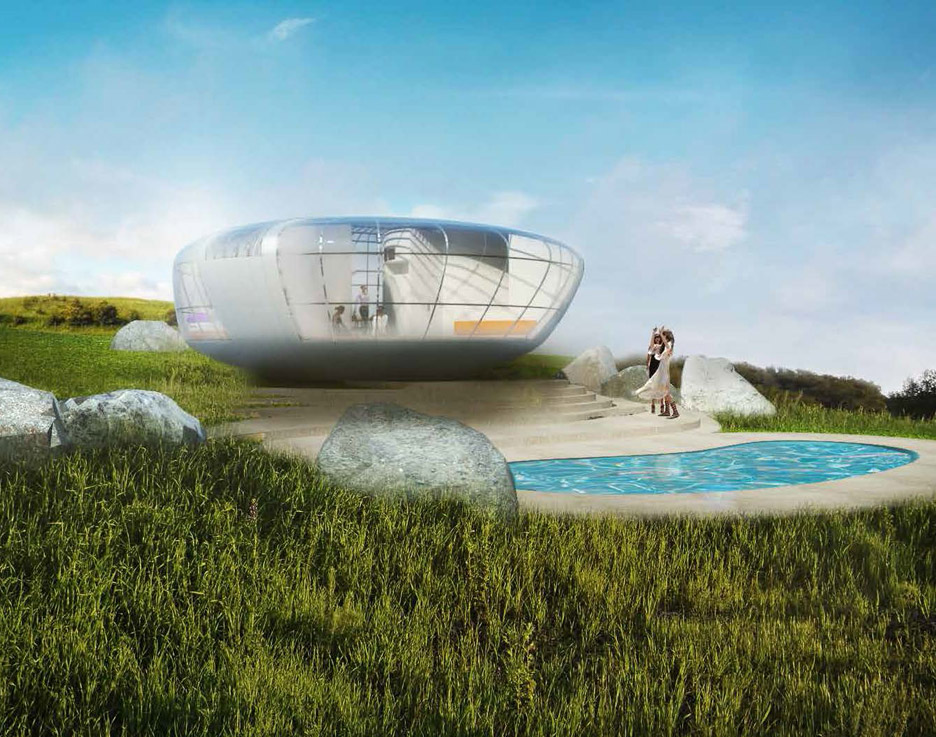
The main floor level is set above ground – a move to prevent the building impacting too much on the landscape beneath it.
Inside, curved rooms are organised around a north-south axis. They include two living spaces – one for lounging and one for dining – and a pair of bedrooms, creating a total floor area of 95 square metres.
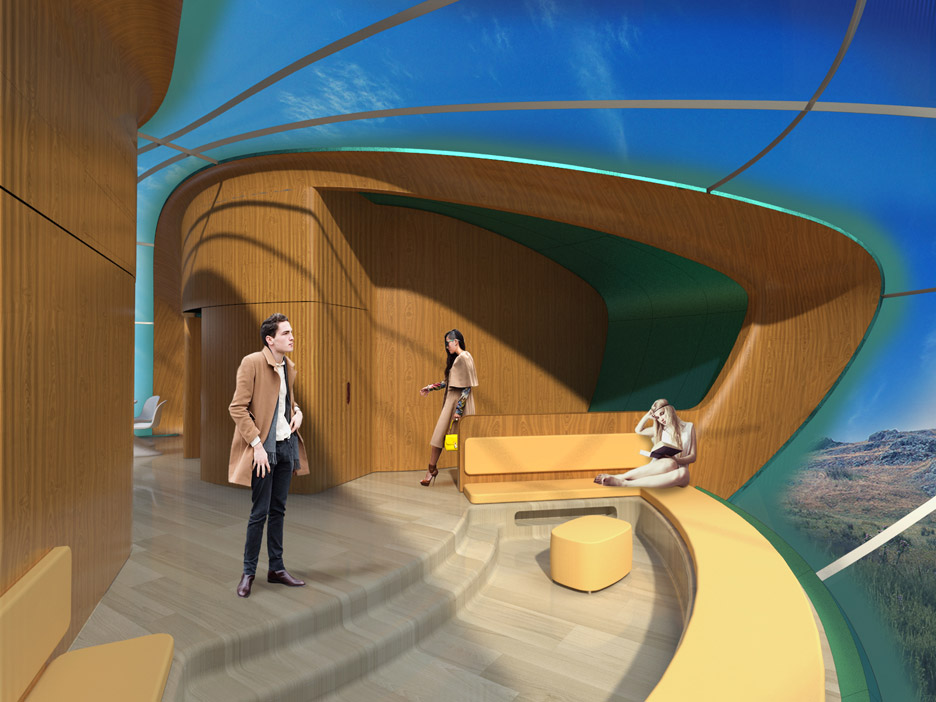
“The Nest Pod is a pre-crafted home that belongs both to architecture and product design worlds,” explained the FR-EE founder, whose best-known designs include the anvil-shaped Museo Soumaya in Mexico City.

“We live in a world where mobility became a very important asset, and this house is designed for a new generation of people that can live simultaneously in different parts of the world,” he said.
“It is an innovative prefabricated house, which is intelligently suited for any environment or location. Its elliptical shape allows the building to harmoniously relate to any context.”

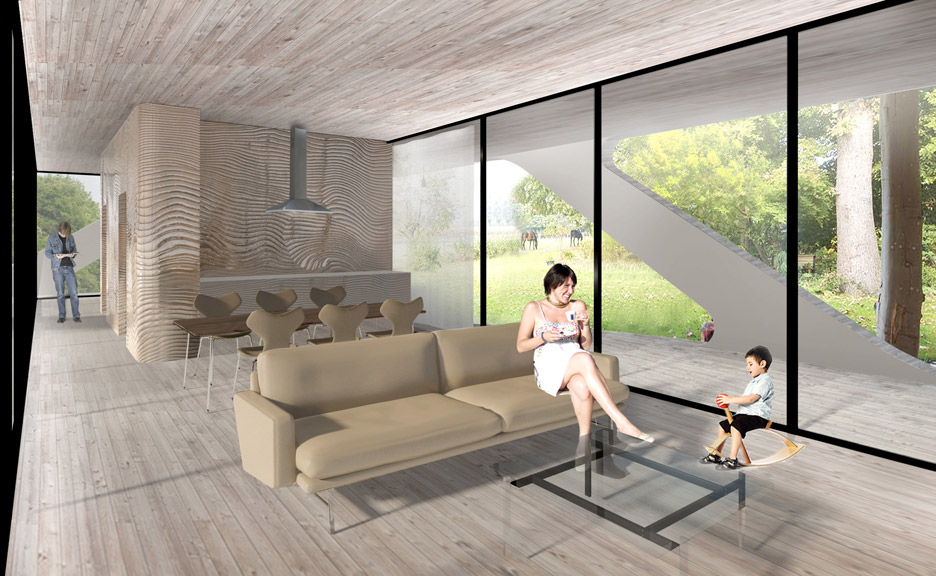
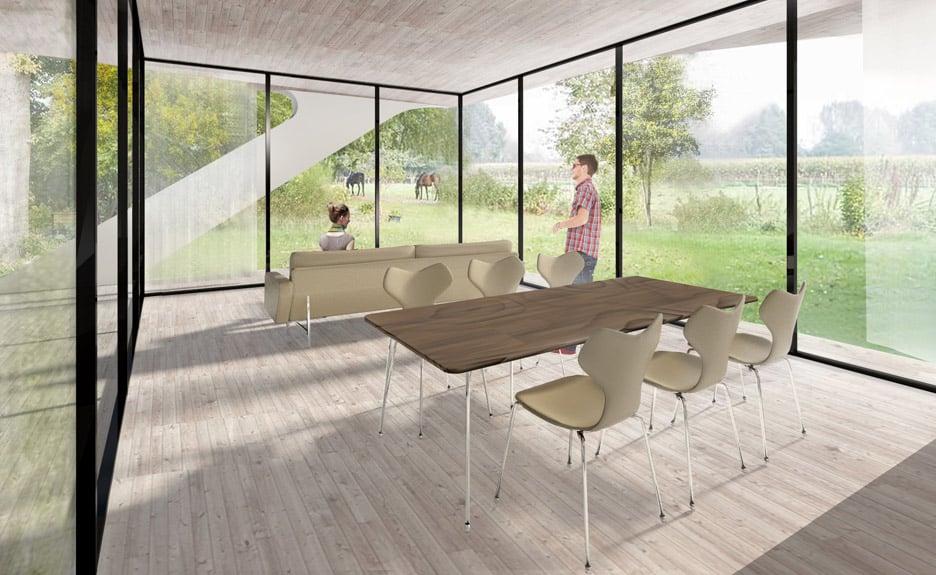
Mayer H’s design meanwhile has a more straightforward rectilinear plan. Its rooms are encased by glass, while an opaque outer structure frames a series of terraces, and also provides shade.
Broad diagonal columns support the overhanging roof, which prompted the name The Diago Home.
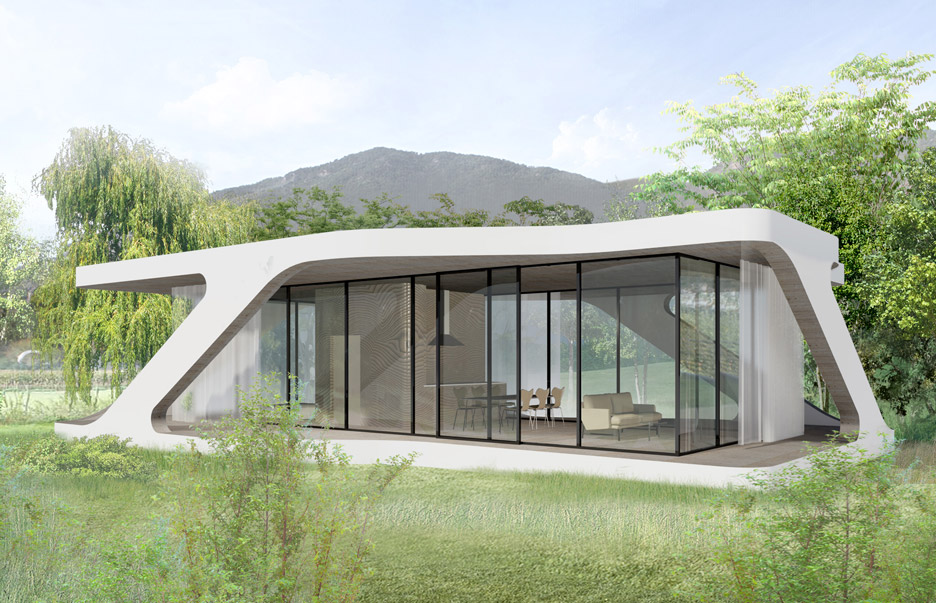
“The Diago Home is a comfortable home with large covered terraces,” said a statement from the architect, who works under the studio name J Mayer H and previously completed the revamp of Seville’s Plaza de la Encarnacíon.
“Floor and ceiling undulate around the enclosed rooms, offering a flexible floor plan with generous outdoor areas,” he added.
Indoor and outdoor curtains will be included, according to the architect, so residents can maintain their privacy.
Revolution Precrafted launched during Design Miami 2015, offering prefabricated homes and pavilions by 30 notable architects and designers, also including Tom Dixon, Marcel Wanders, Ron Arad and SelgasCano.
The company aims to harness the benefits of prefabrication, which include low construction costs and build times, to make aspirational architecture more collectible.
“The core appeal of prefabricated structures is the freedom from location and construction constraints; however, the result is often monotonous, homogenous design,” said the company during the launch.
“Revolution Precrafted Properties reinvent this model by creating unique, high-design spaces that transcend geographic borders and excite the senses.”
Zaha Hadid and Patrik Schumacher unveiled their design for the company at the Design Miami fair – a dining pavilion shaped like an open clam shell.
Related Links: About Robbie Antonio , Contact

by Architectural Digest China


by Ian Spula, The Spaces
This article was originally published by The Spaces, a digital publication exploring new ways to live and work.


Prefab housing — designed by computer and made in modules — is inherently suited to extreme climates and topography.
It can be assembled in a matter of days, sometimes hours, which makes it ideal for isolated sites. And the need for a frame to survive a trip on a flatbed means that extra rigor generally goes into engineering and manufacturing.
A little dressing up and you have a highly durable dwelling.
As prefab comes of age, the offerings are becoming ever more diverse. On one end of the spectrum, Zaha Hadid and Ron Arad recently designed collectable pavilions for garden tea parties for Revolution Precrafted Properties. At the same time, governments are using modular units for Antarctic research stations.
There’s something for everyone, it seems.
Storm-resistant homes have been designed for the US Atlantic coastline in response to Hurricane Sandy and there are even dwellings conceived to withstand tsunamis and earthquakes. Other designs pay heed to snow loads or polar chill. Once one of these tough-as-nails structures arrives on-site, all it needs is anchoring.
Here are six head-turners designed to battle the elements.
Visit The Spaces too see more durable dwellings for intense climates and tricky terrain.

by Designboom


by Madelaine D’Angelo, Huffpost
Design and real estate developer, Robbie Antonio is known for his visionary work and innovative collaborations. His latest project, Revolution, is a collection of limited edition pre-crafted homes and pavilions that seek to democratize design and architecture. The project unites over 30 of the world’s renowned architects, artists and designers to create exclusive, pre-crafted livable spaces. Currently, Revolution is collaborating with Kengo Kuma, Cluckman Tang, Campana Brothers and Pritzker Prize-winner Zaha hadid, to name a few.

How did you start collecting?
Robbie Antonio: I began collecting a decade ago. New York was a major influencing force that cultivated my experience in culture, art, architecture and design. I took every opportunity of free time to visit museums and galleries.
What was the first piece of artwork you purchased and when?
Robbie Antonio: My first piece of artwork was a map piece by Julian Schnabel.
Tell us about Revolution. What was your inspiration for the project? Who are you working with? What should we look forward to?
Robbie Antonio: Each pavilion and home is individually branded by its designer’s personal concept of spatial form and social function. The result is a diverse and global collection of architecturally-innovative, pre-crafted properties, ranging from functional pavilions to modular homes.
My inspiration for the project came from my own passion and experience in art collection. I wanted to make architecture collectible – but at an accessible price point. Revolution preserves the exclusivity of art collection and by introducing prefabricated technology, expands the potential of ownership.
Currently I’m working with some of the world’s top designers and architects, as well as collaborating with brands like Wallpaper* to sign designers.
Throughout 2016, Revolution will continue to debut new designs – both homes and pavilions – at select art fairs.
Related Links: About Robbie Antonio , Contact

by Artnet News
Galleries and auction houses are always searching for emerging art collectors who they can bring into the fold. With the art market boom in recent years, there’s been a proliferation of young international collectors with passion for art, and pocketbooks to back it up.

1. Emma Hall
Emma Hall comes by her love of art honestly—her parents are mega-collectors Andy and Christine Hall, whose appointment-only Vermont art museum, the Hall Art Foundation, features work by Anselm Kiefer, Georg Baselitz, and Joseph Beuys.
Hall got her start in the art world working at Christie’s, Sotheby’s, and Haunch of Venison and now manages special projects and communications at the family museum. She’s also passionate about painting. “I like to feel the artist’s presence in the work. I like to feel color and emotion in art,” she told Artinfo in 2012.
2. Robbie Antonio
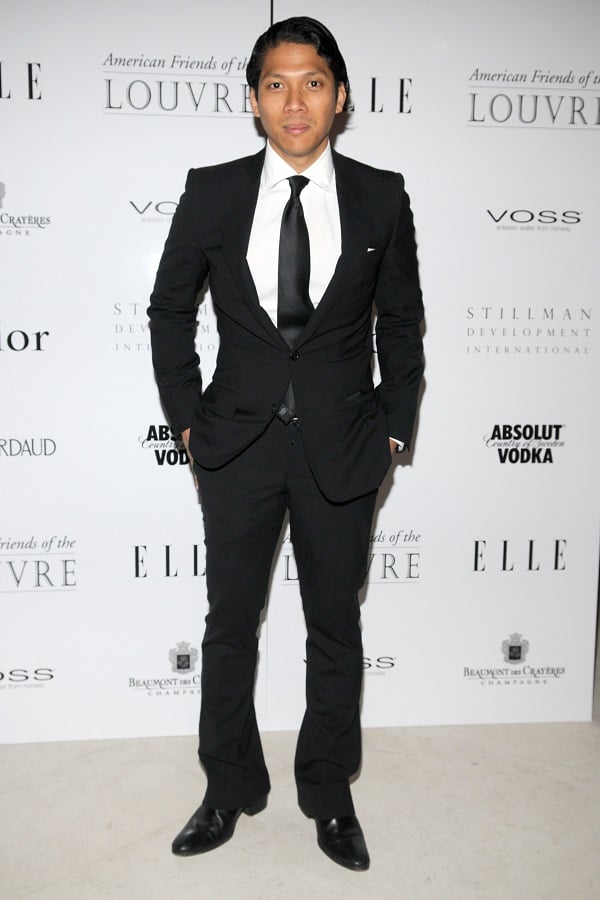
Real estate developer Robbie Antonio has filled his Manila home with a rapidly ballooning art collection filled with the likes of Damien Hirst, Francis Bacon, Takashi Murakami, and Jeff Koons. He’s been called “the biggest collector in the Philippines” by Larry’s List, refers to Marina Abramović as a pal, and hopes to surpass Peter Brant in portrait commissions from blue-chip artists.
“You see Peter Brant do this for Stephanie Seymour. [B]ut I do it for myself! I want to surpass that,” he told Vanity Fair in 2013.

3. Fabiola Beracasa Beckman
Fabiola Beracasa Beckman, whose mother is Hearst publishing heiress Victoria Hearst, is a film producer, philanthropist, and creative director/co-owner of the Hole gallery, Kathy Grayson’s hip Bowery outfit. She also sits on the board of the Art Production Fund.
Needless to say, Beracasa also has an impressive art collection, which boasts names like Matthew Stone, Genesis P-Orridge, Rob Pruitt, and Aurel Schmidt.
4. Aarti Lohia
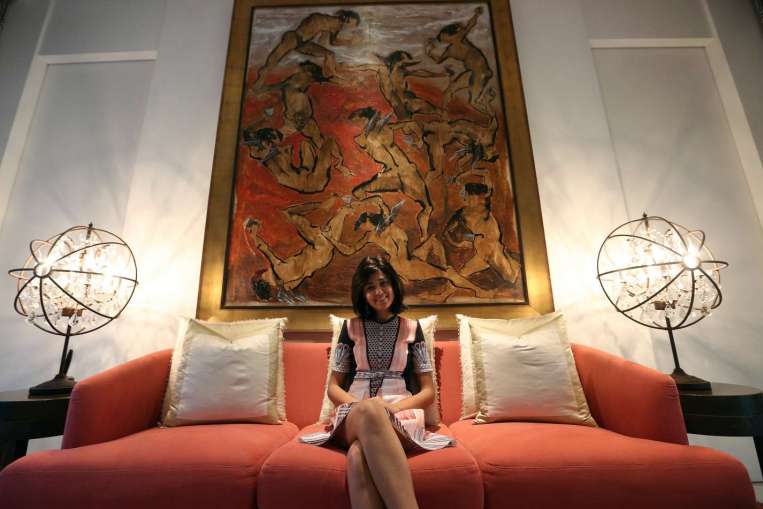
Indian-born, Singapore-based Aarti Lohia has been collecting art for the past five years, assembling a trove of work by blue-chip Indian artists like Bharti Kher, M.F. Husain, Subodh Gupta, and Dayanita Singh, in addition to a growing number of artists based in Singapore and elsewhere.
“I look for imagination and inventiveness and am often drawn to pieces that have an overwhelming sense of memory—both visual and tactile,” she told the Straits Times.
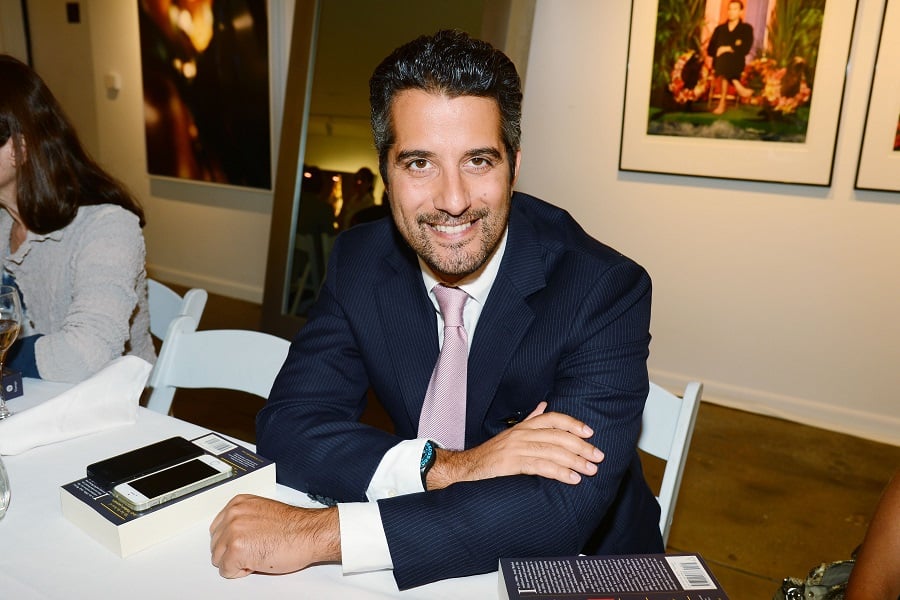
5. Mohammed Afkhami
Iranian-born financier and art lover Mohammed Afkhami, who has been collecting Middle Eastern contemporary art for over a decade, has been identified many times over as one of the Middle East’s major players.
“[A] friend of mine called me up and said, ‘Look, there’s a great Iranian art scene flourishing. Come and have a look at some of these galleries.’ So I went with him, and he took me to this gallery. And I bought my first pieces,” he told Ibraaz. “I mean these were pieces that were $300, $400, or $500. And in the West, a canvas costs much more than that. And I brought the pieces back, and I started getting a little bit into it.”

6. Daniela Hinrichs
Daniela Hinrichs, a German curator, dealer, entrepreneur, and founder of online commerce platform DEAR Photography, has a keen eye for all things related to film.
Hinrichs designed the platform with the hope of inspiring first-time collectors to take the plunge. “Don’t let yourself become embroiled in discussions about what art is and isn’t. Buy the artwork you still love even after you’ve looked at it for the 100th time,” she advises on her site.

7. Amar’e Stoudemire
Amar’e Stoudemire may be best known for his skills on the basketball court, but he’s made it clear that he’s also committed to making a name for himself as a “legit and serious” art collector.
Stoudemire, who was spotted around this year’s Art Basel in Miami Beach festivities, owns work by collector staples like Jean-Michel Basquiat and Andy Warhol, as well as Rob Pruitt, Retna, and Hebru Brantley.
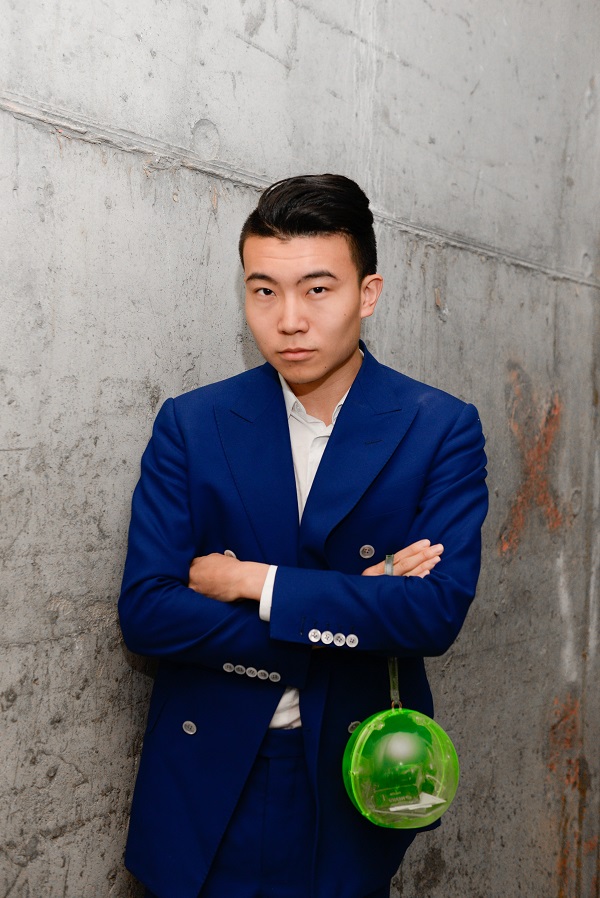
8. Michael Xufu Huang
Michael Huang, a Beijing-born collector and founder of non-profit museum M WOODS, is actually still a student at the University of Pennsylvania, which makes his regular pilgrimages to New York from museum and gallery openings relatively easy.
“I started collecting when I was sixteen,” he told Linda Yablonsky at Artforum.

9. Tiffany Zabludowicz
Tiffany Zabludowicz is another college student who also started collecting at 16—though with the last name Zabludowicz, no one is too surprised.
She has quickly made a name for herself in the art world as not just a well-heeled collector, but also a curator, erstwhile MoMA PS1 intern, and occasional Artspace columnist.

10. Sharmin Parameswaran
Malaysian-born curator Sharmin Parameswaran has been dubbed “one of the most eagerly watched art curators in the country” by local publication Women’s Weekly.
She’s following in the footsteps of her collector father, Dato N. Parameswaran, the former Malaysian ambassador to Vietnam. In 2012, she launched Interpr8 art space, an exhibition space in Kuala Lumpur featuring a large collection of Malaysian and Southeast Asian art.
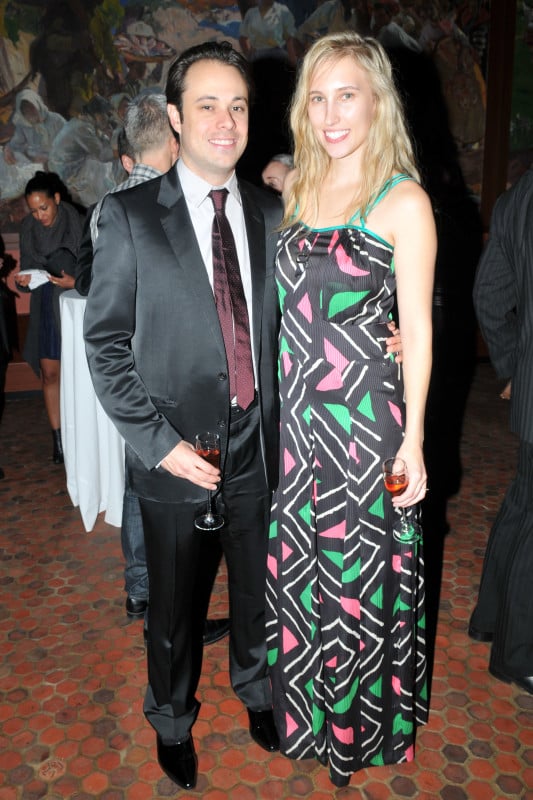
11 & 12. Patrick and Lindsey Collins
Patrick Collins, CEO of Texas-based Cortez Resources, and his wife Lindsey began buying art several years ago with a painting by Ryan McGinness, and now have an extensive collection featuring Tom Burr, Jill Magid, Dan Finsel, and Pedro Reyes.
“We really care about the artists and the relationships we’ve made—and helping people of our generation realize what they want to do in terms of their work,” Patrick told D magazine in 2012.
Source: https://news.artnet.com/art-world/young-collectors-to-watch-2016-415178

Zaha Hadid, Sou Fujimoto and other big names sign the projects
by MARIANA KINDLE, CASA Vogue
The Japanese design office Muji was a pioneer in associating luxury with prefabricated structures. Robbie Antonio then launched the Revolution PreCraft project , which brings together a set of prefabricated pavilions designed by 30 renowned designers and architects, including Zaha Hadid , Sou Fujimoto , Daniel Libeskind and Gluckman Tang.
Its objective is to democratize the design of prefabricated structures. Some of the projects have already been built and presented at exhibitions, others are still in 3D, as future promises. See here a selection of products from the Revolution Precraft line.
CHECK IT OUT: The architecture of the last 40 years
David Salle + Aldo Andreoli Studio (AA Studio) – Art House in the Desert
“Our idea was to make a sort of house-studio for an artist (me) and his family that could be easily set up in a location in the West Texas desert There are few obstructions, as the house was designed to ensure maximum visibility of the surroundings when you are inside.With its areas, the work accommodates different activities: writing, painting, outdoor moments and social gatherings.

Estudio Campana – Installation Bamboo
“We focused on a simple structure with a basic form. We chose to use bamboo in its pure and natural form because it is a light material and very present in Brazilian culture. The installation results in a portable, sensitive piece of furniture and flexible”.

Sou Fujimoto – Infinite Ring
“Our project proposes an investigation into the ergonomics of being in private and public environments. The pavilion takes the concept of predefined spaces and wraps them around a ring, creating a continuous band of habitable spaces. The entire ring is then rotated, generating infinite configurations of spaces and infinite ways to sit, climb or lie down. The result is spatial configurations much richer than the sum of their parts”.

Sou Fujimoto – Esférica Greenhouse
“By transporting the user to an intimate world, where only he and his plants exist, the Spherical Greenhouse intends to investigate our relationship with plants. The pavilion built as a sphere full of circles evokes the idea of having a cosmos in your garden.
The space inside the sphere is flexible and can be arranged according to each one’s taste. The user shares inhabits the same space as the plants: seats become vases for plants and vases become seats for people .”

Tom Dixon – BLOCK
“Inspired by themes ranging from science fiction to Polynesian architecture, BLOCK explores adaptable ways of living, working or playing. For us, spaces intended for such activities can be built on any terrain, with multiple configurations of shelter, from a simple kit of parts. The hard metallic exterior hides a smooth interior, with an all-cork finish”.
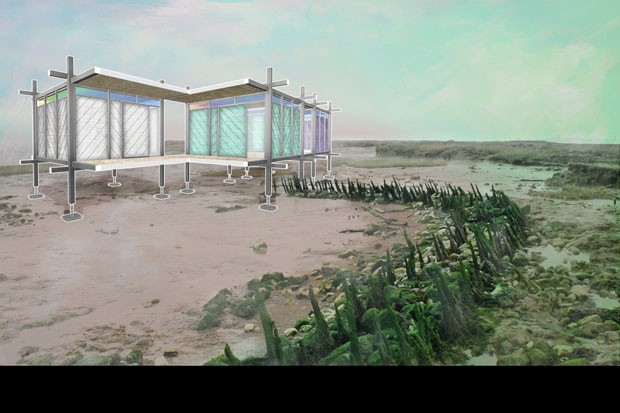
Zaha Hadid – VOLU Refectory Pavilion
“Defined by sophisticated digital processes, the structure was developed in such a way that its components are curved to the maximum. This allows the development of comprehensive projects in a complex and expressive way, through the bending of flat sheet materials , in a relatively simple process, which generates almost no waste of material”.
SEE ALSO : Zaha Hadid: from architecture to design in 15 projects

Other projects:


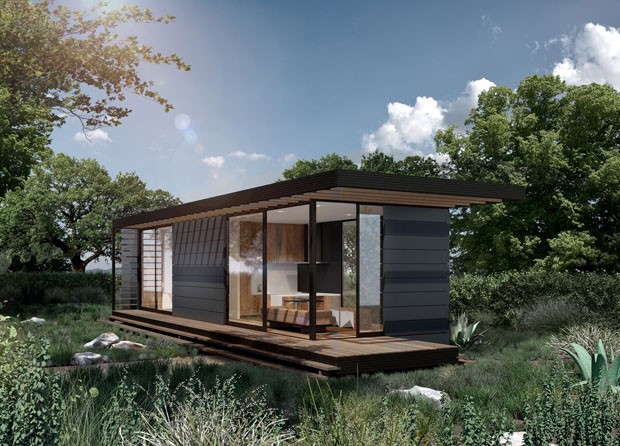





He had already proven himself as a reference musician on the international scene for a long time. Now, Lenny Kravitz has come to show the world that he also has an artist streak as an interior designer with the so-called Instrumental Home. Designed by the architect Marmol Radziner, this modular house is located in a lush forest area and is formed from an office, including a living room, kitchen, bedroom and bathroom.

The dialogue with the environment, according to the Diário Imobiliário, is made there from a glass facade working as a “surround”. Both the living room and bedroom open onto large terraces , while a hammock filters light into the property.

At stake is a set of modular and sustainable houses and pavilions designed by major figures in world architecture, such as the American architect Daniel Libeskind, the Japanese Sou Fujimoto and Kengo Kuma and the Brazilian brothers Fernando and Humberto Campana.
According to the online medium, the spaces are developed with advanced prefabricated materials , personalized design and a low-cost production system, forming an outline of the democratization of architecture, the use of public space and its social function. The series was launched last year by Design Miami, a dining pavilion designed by Iraqi architect Zaha Hadid.


Article seen on
Lenny Kravitz reveals himself to be a modular home interior designer
—
Related Links: About Robbie Antonio, Contact

by FORBES

The groundbreaking event follows the announcement of the two firms to develop, lease out, and maintain the world’s first Forbes-branded commercial building through a joint venture agreement.
Held at the site of Forbes Media Tower® in Century City on Kalayan Avenue, the ceremony was attended by Century Properties and Mitsubishi Corporation executives, including Jose E.B. Antonio – Chairman and CEO, Marco R. Antonio – Chief Operating Officer, Robbie R. Antonio – Managing Director, and Ricardo P. Cuerva – Director and Head of Construction.
Mitsubishi Corporation’s presence was led by Takuya Kuga – Division COO for IFLD, Masahiro Nagaoka – Deputy General Manager Mitsubishi Corporation Manila Branch, Kiyoto Asari – Manager of ASEAN Team, Real Estate Development & Construction Division, Yoshio Amano – General Manager for Manila, Dennis Macalisang – Senior Assistant Manager Industrial Finance Logistics & Development Division, and Ms. Jade Ilagan – Jr. Accounting Officer.
The Forbes Media Tower® project will be undertaken by Century City Development II Corporation (CCDCII), of which CCDC and Mitsubishi have 60 percent and 40 percent ownership, respectively.
The agreement stipulates that CCDCII shall finance the projected USD $100 million (Php4.5 billion) total project cost through USD $51 million (Php 2.3 billion) of equity from CCDC and Mitsubishi, and a 10-year, USD $49 million (Php2.2 billion) senior loan granted by the Bank of Philippine Islands (BPI).
In November 2015, CCDC II and Mitsubishi Corporation signed the loan facility with BPI as lender. Proceeds from the said senior loan agreement will be used to partly finance the P4.5-billion Forbes Media Tower®. The balance of P2.3 billion will be funded through equity contributions of 60 percent from Century Properties and 40 percent from Mitsubishi Corporation.
Related Links: About Robbie Antonio , Contact