Real estate innovation through differentiation

by The Philippine Star

MANILA, Philippines – As luxury real estate consumers standards become higher, developers and investors are likewise doing their best to stand out. One sure fire way to do this, says Century Properties managing director Robbie Antonio, is to innovate through differentiation.

In a roundtable discussion at the recent Wall Street Journal executive conference, “Unleashing Innovation”, Antonio said that differentiation is effective simply because buyers who are paying top-money expect no less than premium products.

“Differentiated products are not only eye-catching, they also offer lifestyles that are notches higher than what the market has been accustomed to”, Antonio said.

Attended by some 200 executives comprised of various industry leaders, entrepreneurs as well as personalities in the business of innovation from around the world, the Wall Street Journal conference encouraged participants to “debate on the most cutting-edge ideas in business and technology today in the hope of inspiring “practical advice and strategies to drive innovation in large companies, small businesses and society.

Speakers included top business executives such as Eduardo Saverin, Facebook co-founder and Investor, John G. Rice, vice chairman of General Electric Company, Owen Mahoney, CFO and CAO of Nexon, James E. Rogers, chairman, president and CEO of Duke Energy, Vineet Nayar, vice chairman and CEO of HCL Technologies, Ya-Qin Zhang, chairman of Microsoft Asia-Pacific R&D Group and Corporate vice president, Microsoft, as well as academics such as Tarun Khanna, Professor at the Harvard Business School, and Director, The South Asia Initiative at Harvard University and Pericles Lewis, Founding President and Professor of Humanities at Yale-NUS College.

Antonio represented the only Philippine company in the forum which scaled a full range of topics from the history of the human imagination, conquering foreign markets through local innovation, less expensive medical innovations, and the recruitment of great creative talent in various industries.

The Century Properties International Collaborations head provided the highlights of luxury Philippine real estate with focus on the differentiation strategy that his company has taken on in recent years and which will continue to do so with more brand collaborations already underway.

Branded successes

Century Properties has a string of successes with its differentiated real estate products, most of which are collaborations with upmarket brands such as the New York-based Trump Organization, Italian design powerhouses Versace Home and MissoniHome, international icon and real estate heiress Paris Hilton and most recently, the most acclaimed international design company based in Europe, yoo Inspired by Starck.

Each of these brands has seeped into local real estate and home design culture with their design offerings of Century Properties projects such as the Trump Tower at Century City, the Milano Residences, the Azure Urban Resort Residences and the Acqua Private Residences Livingstone and Iguazu towers. The entry of the brands have since upped the ante in the local industry and sparked a change in the game.

As unprecedented and landmark partnerships, they have allowed the company to create real estate products that feature never-before introduced and ultra-modern living choices.

Our partner brands have their own distinct aesthetic or design ethos that provide them with directions in designing lifestyle experiences Antonio, who is also Century Properties head of International Collaborations, said.  

Common among such projects are personalized, leisure and wellness-oriented, sustainable and intelligent features.

Century Properties brings personalized living experiences through designs and amenities custom-fitted to a community who share similar lifestyles.

Azure is for families who have embraced laidback living offered by a resort-oriented environment while Acqua is for highly mobile families and individuals with an inclination towards high- design and green living.  

In all of its luxury towers, leisure facilities are a common sight. Spas, built-in pools, modern children play places and themed green-properties have all proven to be a hit.

The Milano Residences has Loggia units, which have their own pools overlooking the metropolis, giving unit owners a rare leisure experience. Meanwhile, Trump Tower has its own luxurious set of spa facilities such as a spa, spa lounge and pool that also overlooks the city. 

Abundant green spaces and pocket parks across its projects promote holistic well-being for their residents, as evident in the Acqua Private Residences. yoo inspired by Starck for instance, has created designs that promote a consciousness of nature or the environment.  

Introducing the “hyperamenatized” living experience

Century Properties has also differentiated its products through its hyperamenitized living spaces or projects with large-scale and modern amenities.

At the Gramercy Residences, a multi-level sky park that features an infinity pool, a lap pool, a kiddie pool, a sky garden, a gym, a spa, a mini movie theater, a restaurant and more have been provided. The Knightsbridge, Acqua and Azure developments likewise all have a mix of some of these amenities all aimed at offering leisure to their residents.

Century Properties has also infused modern technology into its developments buyers are beginning to clamor for smarter products. Beginning with The Gramercy Residences, Century partnered with PLDT to make it the most modern residential infrastructure in the country with its powerful interconnectivity capabilities, whether through internet connection, cable TV or telephony services.

These modern conveniences are also expected to be rolled this out in Century™ other luxury developments.

With the successes of its projects, Century Properties has proven that differentiation might as well be another name for luxury.

Source: https://www.century-properties.com/real-estate-innovation-through-differentiation-2/

The Next Big Thing

He has collaborated with a sea of name-droppable luminaries including architectural legend IM Pei, design extraordinaire Philippe Starck, and the Trumps, Hiltons and Missonis. But these days, the name making waves is that of his own — Robbie Antonio.
Like business partners Donald Jr, Ivanka and Eric Trump, with whom he recently launched Trump Tower Manila, Antonio is a real estate scion who can actually boast of have stepped out of the shadows of an illustrious father by seizing opportunities and adding lustre to the family portfolio.
Son of Jose Antonio, the billionaire founder of Philippines-based Century Properties, the 35-year-old’s first taste of the headlines was in the late 2000s when instead of returning home from the US after graduate school, he incorporated the firm Antonio Development and built The Centurion, a luxury condominium in New York’s Plaza District.
Antonio’s coup was not only in acquiring the area’s first ground-up development in 20 years, but also in securing the services of IM Pei, the Pritzker Prize-winning architect critically lauded for the Bank of China building in Hong Kong, Raffles City in Singapore and the Pyramid of the Louvre in Paris. Designed in collaboration with his son Sandi, The Centurion is the only condominium Pei has designed in a six-decade career.
Could the next-generation property magnate not have chosen a more difficult project to cut his teeth on, I ask when we meet on the sidelines of an art fair in Singapore. (Blouin Artinfo describes him as one of the Philippines’ biggest art collectors, if not, certainly its youngest.) Barely skipping a beat, he says: “It would have been a little too easy at that time to go home to the Philippines and see what I could do there to contribute to [Century Properties]. I wanted to do something very entrepreneurial. It was obviously very challenging, but very rewarding.”
In New York, he met Ivanka who introduced him to the rest of the clan including dad Donald. Professing the mantra “country first, company second, and project third”, Antonio, who had by then returned to the family fold, set out to convince The Apprentice star of his hometown’s growing economic might, resulting in a publicity feat of sizable proportions — Trump Tower Manila, the first Trump-branded property in Asia this decade. Developed by Century Properties, the residential development will become the Philippines’ tallest building when completed in 2016.
“The Trumps are about the superlatives. They want to be the biggest, the tallest, it’s always an -est. Keeping that philosophy in mind we had to convince them it was the right property at the right time,” says Antonio. On the Donald, he adds: “With him you have to be very direct and very specific about what the goals and targets are in a short amount of time. The guy is brilliant.”
As managing director of Century Properties, Antonio is in charge of innovating game-changing projects and branding initiatives. His Trump deal is only but one in a recent slew of big-name tie-ups. Versace Home is designing the interiors of the group’s Milano Residences in Makati. MissoniHome is bringing its colourful aesthetic to the Residences at Acqua Livingstone. And John Hitchcox and Philippe Starck’s design studio Yoo is charged with Acqua Iguaza, the pair’s first residential tower in the Philippines.
Star architects and designers are a big draw to homebuyers, he says: “It’s pride of ownership. When you own the first condominium by Versace in Asia or the first Missoni condominium in the world, it’s limited edition.” Such collaborations, he also acknowledges, allow the group to “achieve a premium”. “I have a commercial point of view and an aesthetic point of view, and I like to marry that and keep a balance between those two,” he explains.
Antonio, after all, comes across as the sort of art-and-design geek who can write a dissertation on Abstract Expressionism or the Mid-Century aesthetic off the top of his head. It’s that fixation with creative expression that even has the entrepreneur picking out door hinges in person, or flying to China or Italy to look for just the right stones for his buildings. “I’m 100-percent focused on the details, too obsessed sometimes,” he concedes.
Robbie Antonio on…
Personal style
“Because of what I do, people think I care a lot about brands. But sometimes I do, sometimes I don’t. I don’t wear logos and 90 percent of the time I don’t even wear a belt or watch. I’m more particular about design and I tend to favour bespoke items because it’s about personal style and taste.”
Some of the artists he collects
“Marilyn Minter, Maurizio Cattelan, Kenny Scharf and Tracey Emin. They are all people who I have either met or respect for their tremendous amounts of knowledge in their art. Art is not just visual. It’s how your sensibilities are affected or influenced.”
His new New York residence
“It’s going to be completely contemporary and super abstract. Because I gravitate to art and design, I have to make sure that it’s visually impactful. It’s a project I’m super obsessed with.”


BY LAUREN TAN, Prestige Online


Source: https://www.prestigeonline.com/sg/people/the-next-big-thing/

Stranger Than Paradise

Will the Philippine government’s ambitious plan to attract luxury tourism threaten the environmental wonders that have made the country one of the last unspoiled tropical destinations in Asia? Two islands—one pristine, the other overpopulated—sound a cautionary note.


SEA WORTHY | A view of the Bacuit Bay archipelago, composed of 45 islands and located in the Philippine province of Palawan. Photography by Simon Watson


ASK THE AVERAGE WESTERNER what he knows about the Philippines and the reply will likely touch on Imelda Marcos’s shoe collection, or Manny Pacquiao’s knock-out record, or the Bataan Death March, or other things that don’t necessarily scream “paradise.”

For this, I am grateful. Arcing down toward El Nido, 260 air miles southwest of Manila, I gaze upon spectrums of seawater rarely observed in nature—Scope mouthwash deepening to Edge Shave Gel—and, in my experience, never before observed without American accents and steel-drum tunes ringing in my ears. The breathless reports I’ve heard of Bacuit Bay’s gob-stopping natural beauty seem, if anything, to have under-hyped the vista passing beneath the plane.

Bacuit Bay, home to an archipelago of 45 islands bordering the South China Sea, occupies a place in the Filipino psychogeography like Alaska’s in the American imagination: an unspoiled national Eden that few citizens ever get around to visiting. The bay sits at the northernmost tip of Palawan, the Philippines’s most sparsely populated, westernmost province, which brands itself “the last frontier.” The 19-seat turbo-prop charter to the bay’s lone village, El Nido, is reportedly the most expensive domestic airfare in the Philippines. (An informal survey of my plane mates turns up zero Philippine passport holders and a predominance of Japanese and South Koreans.) But the view would seem to justify the ticket price: The bosky little ingots of land studding the bay seem to bear no trace of human settlement, and the blue-green tides are wholly unscarred by cruise ship or Jet Ski wakes.

The bay’s welcome lack of development is partly an effect of environmental progressivism (in 1998, the government declared northern Palawan a protected area) and partly an emblem of the country’s late-blooming tourism industry. Public perceptions, shaped by headline-grabbing earthquakes, typhoons and periodic kidnappings—mostly by Muslim extremists around the contested southern island of Mindanao—have helped chill leisure travelers’ enthusiasm for the island nation. And, until recently, its roadways, airports and hotels simply couldn’t support large numbers of visitors accustomed to first-world amenities. But in the hopes of winning a wedge of a market long dominated by Thailand and Bali, the Philippines has committed unprecedented sums to its infrastructure budgets—$9.6 billion in 2013—and undertaken an ambitious media campaign to help assuage its image problem.

The efforts appear to be bearing fruit. Fueled in part by the growing tourism industry, the nation’s GDP swelled by 7.1 percent in the third quarter of last year, Asia’s second-fastest growth rate, bested only by China. “There is no better time to be in the Philippines than now,” says Robbie Antonio, managing director of Century Properties, a Manila real estate firm whose array of luxury construction projects includes Trump Tower, Makati City. “In our industry, demand for real estate has never been higher.” In 2012, the Philippines received 4.3 million foreign visitors—more than twice its intake of travelers just a decade ago—inspiring a rash of media speculation that the nation’s beach towns may soon go the way of Acapulco. In places like the Philippine island of Boracay, the transformation is well under way, so I head first to Bacuit Bay, to check out a diminishing rarity: a self-proclaimed tropical paradise that contains no go-kart tracks or daiquiri stands or much of anything but wild animals, water and sand.

As I climb off the boat, a pair of long-tailed macaques, whom I assume are on the payroll, rove the cliff face, sampling white flowers.

If, like me, you are not categorically keen on Southeast Asian beach resorts, it is probably because you have been to Thailand’s Phuket or Krabi, where you sat on heel-hammered sands drinking a warm gin and tonic from a literal bucket, wishing you’d discovered the place before the invention of fire-spinning, Katy Perry and laser shows. But the Lagen Island Resort, where I fetch up after a 40-minute boat cruise, is not that sort of place. Situated on a remote and otherwise deserted island distinguished by serous limestone cliffs, Lagen has 50 private rooms, including a crescent of eight hip-roofed cottages poised on stilts in an oval of placid water that’s the color of molten Coke bottles. Admission to this world of ecofriendly ease—the resort has its own desalination and power plants, and wastewater-processing technology—does come at a comparative premium. Cabanas here range from $400 to $650 per night, a relative fortune in a land where clean and comfortable beachfront accommodations abound at a tenth or so the price. As I climb off the boat, a pair of long-tailed macaques, whom I assume are on the payroll, rove the cliff face, sampling white flowers. In the perfect absence of thundering house music, the call of a lone, coarse-throated bird thunders like a foghorn.

Under the unwalled reception pagoda, frozen towels and glasses of gelid melon puree are put into our hands. We are gently instructed to set our mobile devices to vibrate for the duration of our stay. We are shown the beach, the slate-tiled saltwater pool and the al fresco cocktail shanty—phenomena my fellow travelers quietly moan over and photograph with reverent diligence. The temptation is strong to take to a lounger and lapse into basking-iguana consciousness. Instead, I submit to the activities director’s recommendation to head out on a tour of Bacuit Bay’s astonishments.

My guide, a friendly and knowledgeable young man named Angelo Gustillo, ferries me across the bay to a small lagoon, known locally as “the small lagoon,” which you get to by kayaking through a narrow fissure in a limestone breaker. Here, I swim through a canyon filled with green water of such violent luminosity that it’s like breaststroking through a radioactive Midori cocktail. Green waverings play on the high gray stone. Plashings and gaspings of a sparse pack of astounded tourists echo off canyon walls. I suffer a vague despair that I am neither Brooke Shields nor 13 years old.

Gustillo takes me snorkeling in a coral grove, going so far as to summon a crowd of gorgeous fish by chumming the water with hacked-up bits of less gorgeous ones. I see clown fish being gleefully tickled by anemones. I see schools of Day-Glo creatures that look like they were designed by Wes Anderson. I hear the snicky-snacky sound of coral breakfasting. He takes me spelunking through a Neolithic cave that is both prettier and tidier than my house. He brings me to the summit of a little mountain to take in a panorama of the bay and, with any luck, to spot some of Palawan’s celebrity fauna: green sea turtles, dugongs, sharks, whale sharks and the world’s most adorable ungulate, the Chihuahua-size Philippine mouse deer. At this point, I’m so surfeited on natural spectacles, it’s faintly disappointing not to see a troupe of all these things executing Busby Berkeley maneuvers for my personal delectation.

Among Palawan’s deep trove of wildlife, the most precious to the local economy, Gustillo explains, is the swiftlet, a small darting bird whose nests, built largely of its own spittle, are the essential ingredient in bird’s nest soup. A swiftlet nest (nido in Spanish, hence El Nido’s name) sells for upward of 200 Philippine pesos per gram ($2,265 a pound). A few years back, Gustillo eked out a dangerous living retrieving the nests from crevices high in the cliff faces. “So many of my friends died doing that kind of work,” he says, explaining that nido hunters disdain safety harnesses. “That’s how it is with many Philippine people. They do what they have to live.” But in the name of social and ecological responsibility, Lagen’s resort manager tells me later, the El Nido Resorts have made a point of hiring nido hunters away from the cliffs and into careers less hazardous for the swiftlets and for the hunters themselves.

LATE IN THE AFTERNOON, I return to Lagen Island. I laze around my handsome cabin. I laze some more on my private bayside veranda, gnawing a mango of life-altering excellence. I watch silvery small-fry dance and play across the water’s surface. Then I reflect that they’re not dancing and playing at all. A bigger fish is down there trying to murder them. But such is the weird, solipsistic derangement that starts to takes hold when you’re in a place where the chief anxiety is the slowness with which the shadows grow on the shore-front chaises. When the light begins to fail, a staffer announces that the sun will soon be going down. My fellow guests and I get excited about the rotation of the planet as though it were an impromptu performance by Tom Jones. We board a sunset-watching vessel and stare at the big Clingstone peach in the western sky. The fiery lacuna the sun burns into my field of vision somehow feels like a valuable memento.

Sumptuous though Lagen Island is, it seems a poor relation compared to Pangulasian, westward across the bay. After a fire razed the property a few years back, Pangulasian underwent a ground-up restoration, completed in October 2012. The result is a property nearly unsettling in its opulence. Accommodations at Pangulasian range from $800 per night for a beachfront cabana, to $3,300 per night for an eight-person suite of villas equipped with a private infinity pool. During my visit, the staff is still making refinements. One of these is a plan to query guests in advance as to their music and fragrance preferences, and moments before arrival, to flood the cabana with, for example, gardenia and Metallica.

At sunset, I sit on a balcony with Pangulasian’s manager, Lei Policarpio, dining on sea bass and foie gras–whipped potatoes, watching the sun perform. I mention to Policarpio my strange new understanding of the sun—Sol the product, Mister Tom Jones.

She nods. “Yes, the sun is a product,” noting that the island’s east-west orientation treats the guest to two solar recitals per day. “The beach is a product, too.” Then she frowns, looking down on the glowing strand. In her opinion, the product could be handsomer. Too many bits of shell and coral litter the sand.

“You could have it sieved,” I suggest unseriously.

“We’re going to try with rakes,” but if the rakes don’t do the trick, says Policarpio, she will have the beach sieved.

IF BACUIT BAY FEELS like the Philippines’s best-kept travel secret, its worst-kept secret is the island of Boracay, in the region of Visayas, a 40-minute flight south from Manila. Seen from above, such a profusion of windsurfers and parasails mob the limeade-tone shallows that the island looks besieged by moths. The flourlike beaches of Boracay, a narrow oddment of land a brief boat ride from the mainland town of Caticlan, have drawn throngs of foreigners since the ’80s. Its years of hard use aren’t difficult to detect. Not many acres of this 10-square mile island remain unclaimed by hotels or houses and golf courses. The few remaining postage-stamp size wildernesses are staked with “for sale” signs. Boracay’s main attraction is the White Beach, a 2.5-mile stretch of bright sand along the island’s west coast. When I first arrive, I have some difficulty finding it. The beach, as it turns out, is hiding behind a long bulwark of commercial establishments, including but not limited to: the Obama Grill (slogan: “You want good food? Yes we can!”); a shooters bar inviting patrons to accept its “still standing after 15 [shots]” challenge; the Facebook Resort; a shopping mall; and an uncountable number of T-shirt vendors, massage touts and diving tour agencies.

Visiting Boracay after Palawan admittedly subjects the place to an unfair comparison. Still, I’m pleased that Palawan’s enviro-protected status has prevented people from erecting shooter bars on the hawksbill turtles’ nesting beds. Shouldering through the White Beach’s Times Square–density throngs, it’s hard to greet happily those elements of tourist culture that have already dimmed the appeal of places like Phuket: pedicurists plucking at your sleeves; Russian tourists dancing Gangnam-style at a beachfront club; restaurants lit with so much neon they look like rides at the state fair; Wilford Brimley lookalikes dining wordlessly with young Filipinas whom one can only optimistically suppose are mail-order brides.

According to press reports, the island is beginning to suffer serious ill-effects of its own popularity. The relentless foot traffic notwithstanding, hotels and seawalls built too close to the beach are contributing to the quickening erosion of Boracay’s beaches. In recent years, boat anchors and heedless divers have helped kill off much of the surrounding hard coral. Leakage from below-code septic systems has been known to taint the beach sands. Among Boracay’s service-sector workers, nervous rumors circulate that the environmental authorities plan to shutter the island for a season or two to let its ecosystem convalesce.

Down by D Mall, the White Beach’s retail epicenter, I pause to chat with boat tour operators Rene Plemones and Reynald Bernardo, who fret that the island and their livelihood may fall victim to its own success. “The development is a problem here in Boracay,” Plemones says. “There are so many tourists, and so many hotels doing violations to the environment. How long will the tourists want to come here? We don’t know.”

An official I queried at the Philippines Department of Tourism claimed not to have heard of any plans to close the island, but the rumor is regrettably familiar to Plemones and Bernardo. “Maybe it’s going to happen,” says Bernardo. But even a rest-cure isn’t likely to restore Boracay to its former preeminence, he says. “Boracay used to be number one, but now number one is Palawan. It’s the best island because of the nature. Boracay cannot be Palawan.”

Fair enough. But even here on Boracay, I ask, is there maybe someplace to, you know, dodge the tourists and get off the beaten track? Plemones muses, shakes his head. “I don’t know about something like that.”

But, the White Beach is not devoid of appeal. And at mealtimes, it’s well worth wending your way to the fish market, or talipapa, at the center of the labyrinthine D Mall. Here, for a modest sum, you can snag a fresh-caught fish or a still-gesticulating crab, which you then take to one of the half-dozen or so “cooking service” restaurants surrounding the market. A capable chef will flay and cook your catch to order. Eating your weight at the talipapa plaza is a wise thing to do.

One afternoon, I ask my guide, a young man named Yeng, if he might help me track down some less tourist-friendly fare. He gives me an uncertain look. “Have you eaten balut?” Balut, for reasons that soon become clear, is a dish whose sale and consumption are forbidden on the White Beach. We head inland, and soon come across a plywood shelter full of local guys watching television, one of whom has a crate of it.

Shouldering through the White Beach’s Times Square—density throngs, it’s hard to greet happily those elements of tourist culture that have already dimmed the appeal of places like Phuket.

Balut is an unborn duckling scalded in its shell, apparently, before hatching. By way of instruction, Yeng eats one first. He peels the shell, douses the occupant with vinegar and knocks it back, unchewed, like an oyster shot. My turn. A tittering mob gathers. I peel my egg and see a beak, an eye and some matted black down. Steady on, down the hatch. Okay, a couple of problems: First of all, the notion of swallowing something with such an obvious face does not inspire my throat to open for business; second, “duckling” seriously understates the creature’s weight class. Lodged halfway down my gullet, the thing feels like a condor. A boa constrictor would have a hard time managing.

About halfway past my tonsils, the bird makes a break for it and flies toward the light and into my palm. I give it an unceremonious burial behind the television shack. For the better part of a week, I will feel its ghost impression on my uvula, but it’s hard to regret any experience that gives a dozen rubbernecking strangers the gift of helpless, tearful laughter.

My last full day on the island, I am still hung up on the idea of finding a spot less traveled by my fellow tourists. In my guidebook, I find mention of a local attraction that seems like it might be underattended: a bat cave near Ilig-Iligan Beach, on Boracay’s less-populous eastern shore. Even Yeng has never ventured there, which seems a good sign. He arranges for us to double (or, more accurately, triple) helmetless on a stranger’s wimpy-looking scooter. We rocket terrifyingly through traffic, swinging away from the hotel strip, through a simple village where the houses are sheet-metal shelters. The paving peters out, and the road dead-ends at a band of green ocean.

Yeng and I climb through a fence of rusted barbed wire, down to a beach of brilliant white, thrillingly free of humanity. At the north end, Yeng finds a pair of barefoot kids in a cabin enclosed by a driftwood fence. They’re maybe eight and ten years old, but they know about the bat cave and agree to take us there. They lead us up an eroded bank, past a couple of “No Trespassing” signs, through a dense patch of woods to a forbidding hole in the ground. It is dusk, and my plan is to hang around by the mouth of the cave until the bats burst forth in a huge photogenic plume, but the children go in. I follow, down and down over guano-slicked rocks, the descent getting scarier and less hygienic by the instant. I try to tell the kids that I’ve gone deep enough, that really, I’m just waiting for the bats to fly out, you know, to perform, like Mister Tom Jones.

“No,” one of the boys says.

“What? They don’t fly out at sunset? All bats fly out at sunset.”

“No,” he says cryptically.

The unseen bats are shrieking, evidently enraged at the intrusion. They howl and wheel but stay hidden in the dark. The light at the cave’s mouth begins to fail. My guide is right. These creatures, who’ve presumably been here since before the arrival of the first tourist boat, have no intention of putting on a show. I respectfully withdraw, climbing up into the twilight, down to the empty beach, where I wash my hands in the sea.


Source: https://www.wsj.com/articles/SB10001424127887324678604578340371259215406

Brazilian carnival at Manila Polo Club; Miss World 2012 visits Manila

By: Maurice Arcache, Philippine Daily Inquirer

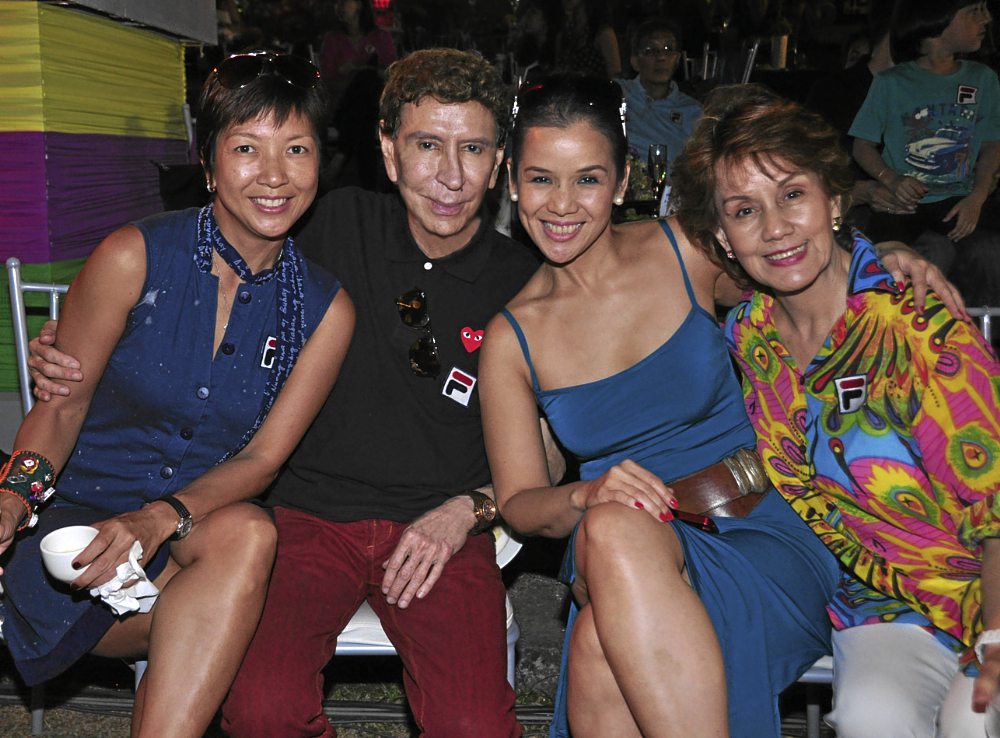
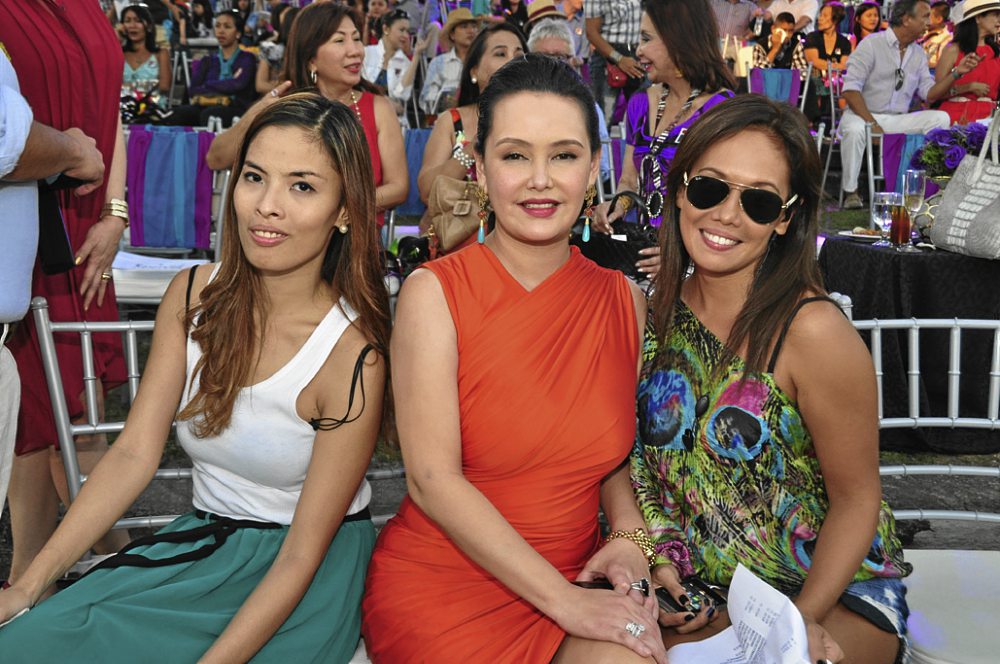
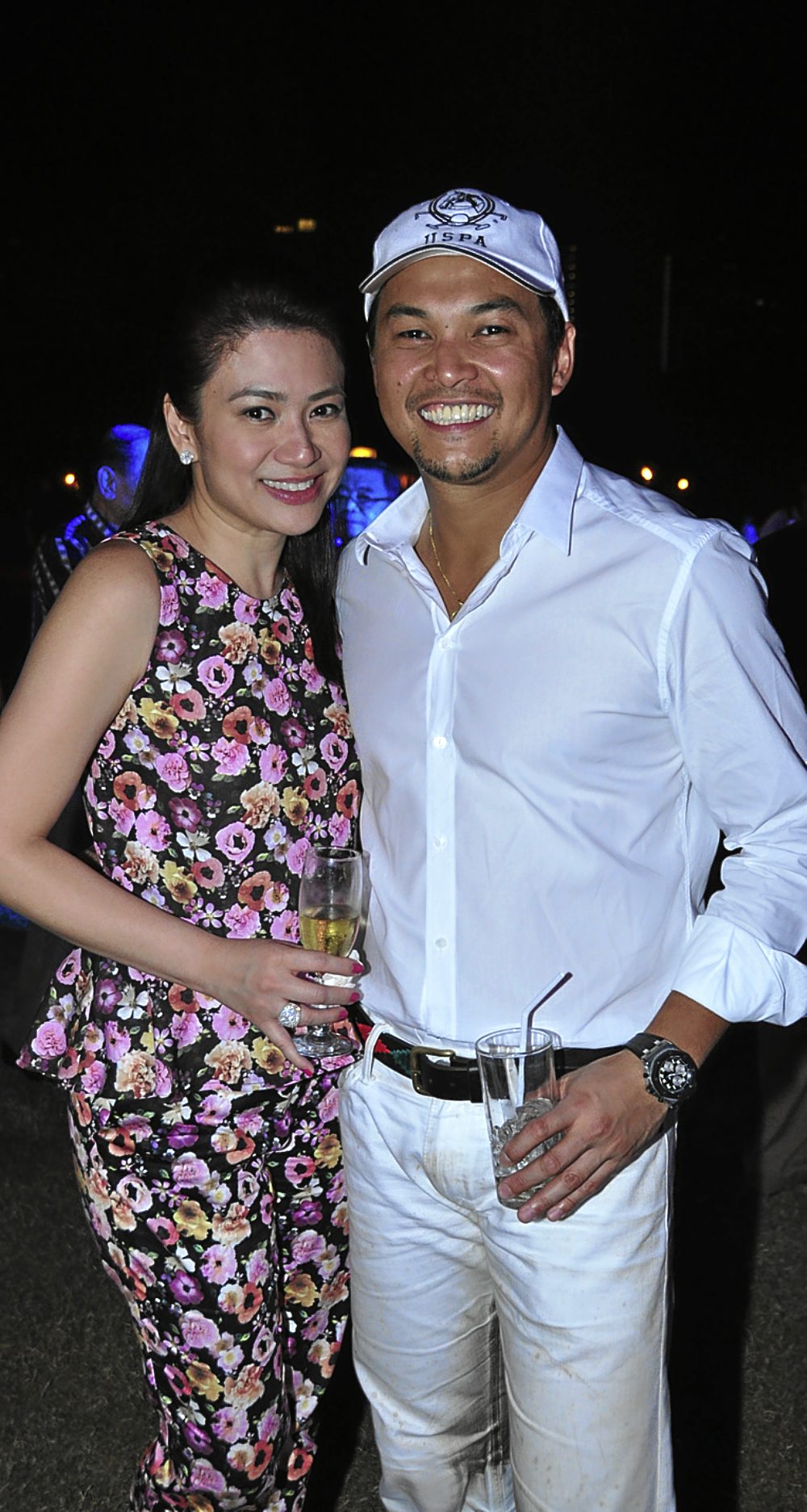
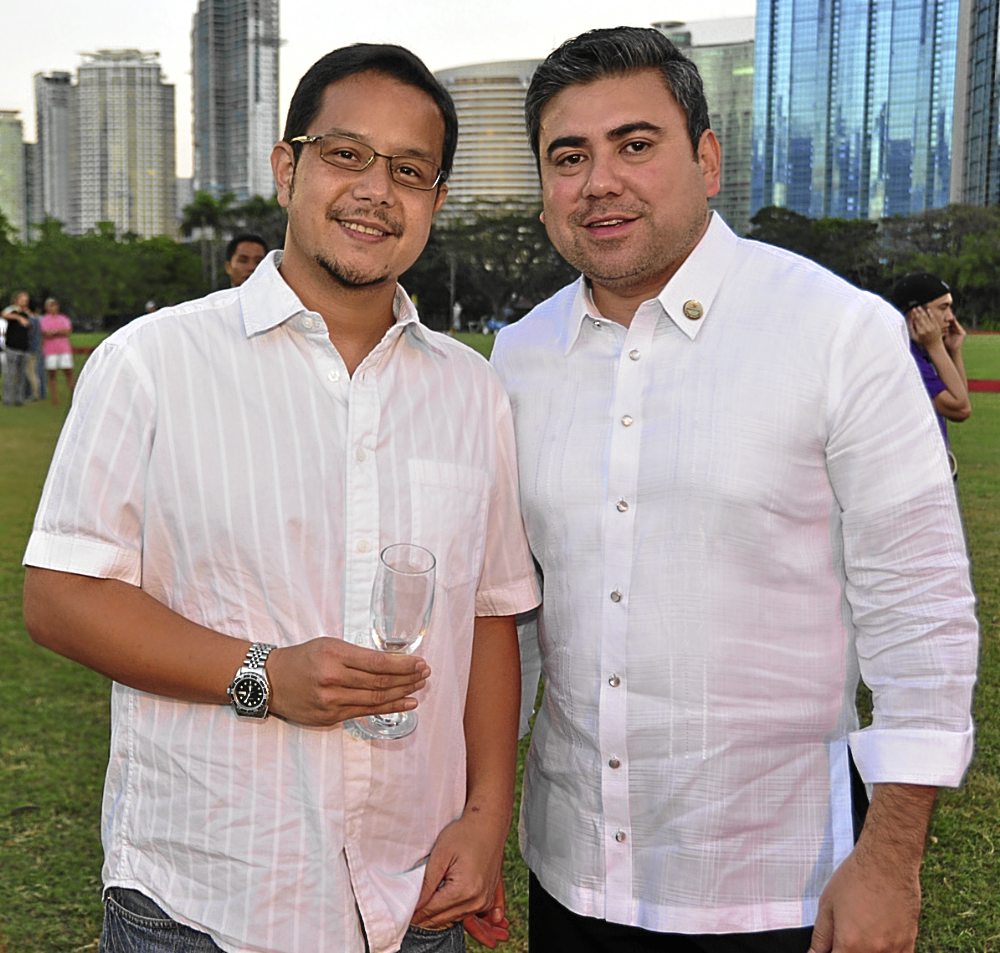
The 2013 Fila Polo Cup at the Manila Polo Club in Forbes Park was more colorful than ever because of its unique theme, “Brazilian Carnival!”

By 6 p.m. there was more glitz than ever before, dahlings. Superbly hosted by handsome Fila endorser Fabio Ide, the affair had endless entertainment by Guarana, Escola de Samba de Manila Dancers, Maracuja Dancers and “Talentadong Pinoy” hall-of-famer Astroboy.

Leading the Fila officialdom present were president and CEO of Fila Philippines, Cris Albert, and husband, chair Butch Albert, who was marking his birthday on the polo field that day, palanggas.

Astroboy had everyone amazed with his fiery display of fierceness. No wonder he is Manille’s premiere hoop artist and “Talentadong Pinoy” Grand Champion.

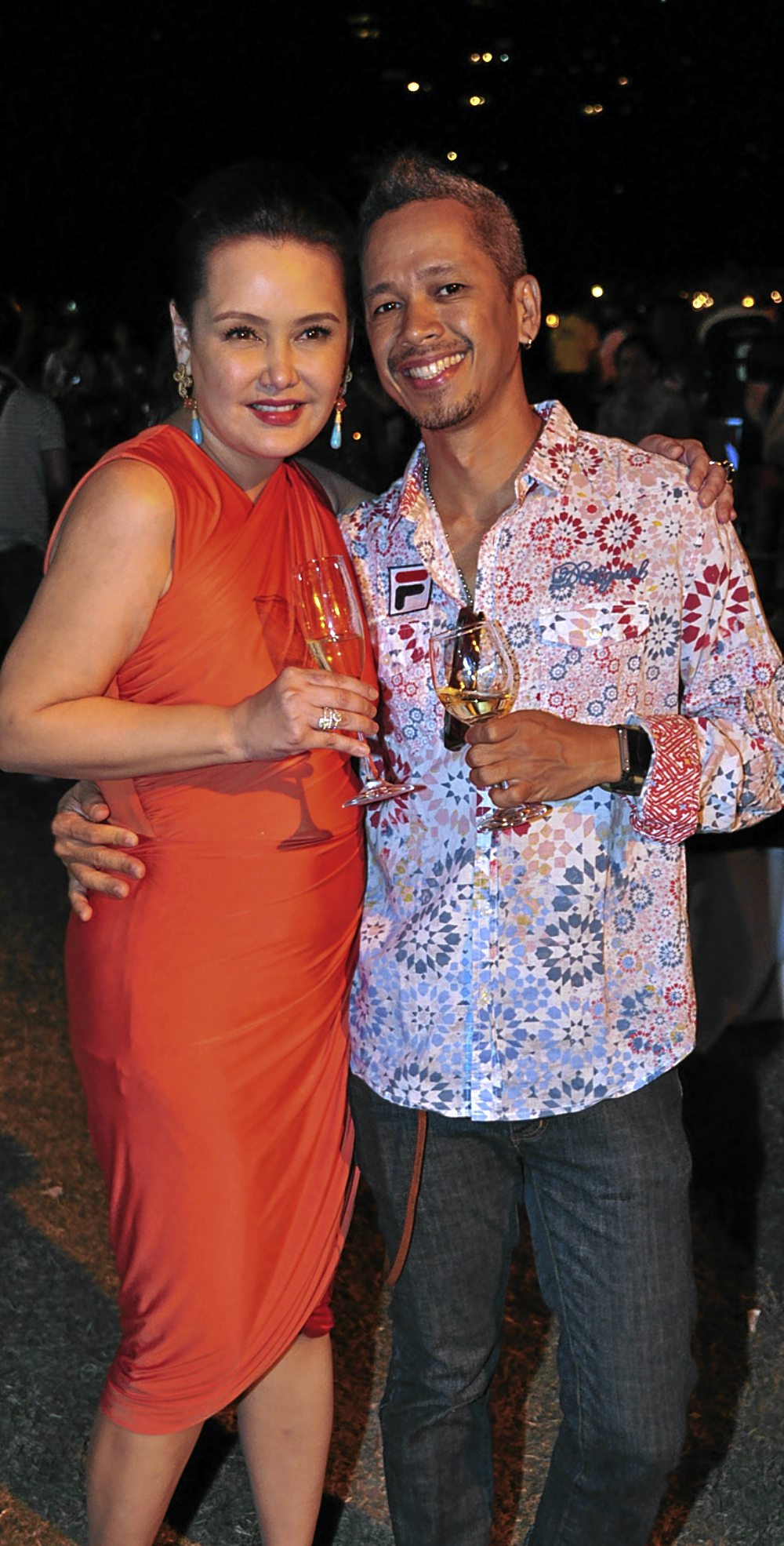
JEENA Llamas Lopez, moi, Deena de la Cruz, Maricris Albert

“Why a Brazilian carnival”? moi asked Cris A. “Merely because when it comes to emotion, color, atmosphere, and sheer over-the-top joyous celebration, there’s nothing that beats the Brazilian method and rhythm. This is a perfect welcome for Fila’s bigger direction in 2013, which has stayed true to boldness, color and design,” said the chic Cris, as she sipped her chilled flute of Dom Perrignom, dahlings.

The Rio de Janeiro-style Mardi Gras performing at the polo field sent the men and the young-at-heart rushing up front to get a 3D view of the women dancers. Wow!

The carnival was capped by kaleidoscopic fireworks.

QUEENIE Rehman,Mark Field, MissWorld 2012Wen Xia Yu

All in all, some 800 guests enjoyed the night. That’s Fila for you, dahlings.

(More info on Fila? Log on to www.fila.ph.)

Mandarin festivity

Somehow I enjoy Chinese New Year’s Eve more than the traditional New Year’s Eve. And this year was no exception when the elegant Mandarin Oriental Manila held the grandest lunar new year bash outside of Binondo with the 17th edition of its lunar fest welcoming the “Year of the Water Snake.”

RUBY Chin, Cris Albert, Ana Abad Santos

It began with cocktails led by major sponsors BMW, Hennessy, China UnionPay, Enchanted Kingdom, Universal Harvester Inc., Dragonair, Mandarin Oriental Guangzhou and  Makati City at the chic MO Lounge.

Guests of honor were Makati Mayor JunJun Binay, with his daughter Alexi, Chinese Ambassador Ma Keqing, Netherlands Ambassador Ton Boon von Ochssée, with his wife Martine; Singaporean Ambassador VP Hirubalan, with his wife Mano; and Indian Ambassador Amit Dasgupta.

SHEILA and Mikee Romero

Miss World 2012 Wen Xia Yu of China joined the celebration, palanggas.

Colorful ceremonies followed outside the hotel, at the corner of Makati Avenue and Paseo de Roxas, where Master Joseph Chau performed the Paai-Shan ceremony.

Sharing the honors of dotting the five lions “waiting to be awakened” were dashing hotel manager Oliver Kreuzer, Jardine Matheson Group of Companies in the Philippines country chair Nonoy Colayco,  Mayor Binay, Metropolitan Museum of Manila president Tina Colayco, philanthropist Rose Marie “Baby” Arenas, Jocelyn Kreuzer, Pangasinan Rep. Rachel Arenas, Jullie Yap Daza, Asian Carmakers BMW president Maricar Parco, Moët Hennessy Asia-Pacific manager Randy Uson, and of Universal Harvester, Inc. EVP Mila How.

JIM Garcia, Raffy Llamas

Enchanted Kingdom fireworks lighted up the sky at midnight, as guests witnessed the awesome video projection of a colorful snake slithering down the column of the hotel’s exterior, would you believe?

Executive Chinese chef Hann Furn Chen and executive chef Rene Ottik cooked up prosperity dishes, such as Steamed Live Garoupa with Superior Homemade Soy Sauce; Braised Chicken with Dried Oyster, Black Moss and Golden Garlic in Oyster sauce; and Tin Hau’s signature tikoy.

CRIS Albert, Jason Luengo

Après gorging all that after midnight, it was time to party some more and burn out all that calories, dahlings.

Yes, palanggas, Mandarin’s traditional Chinese New Year was totally hard to match, dahlings.

Philippe Starck building

Century Properties has scored another real-estate coup with its newest project, Acqua Iguazu Yoo, inspired by world-class namedroppable Philippe Starck no less, dahlings.

The fifth building within the Acqua Private Residences, a 2.4-ha property on Coronado Street,  Mandaluyong, was recently inaugurated.

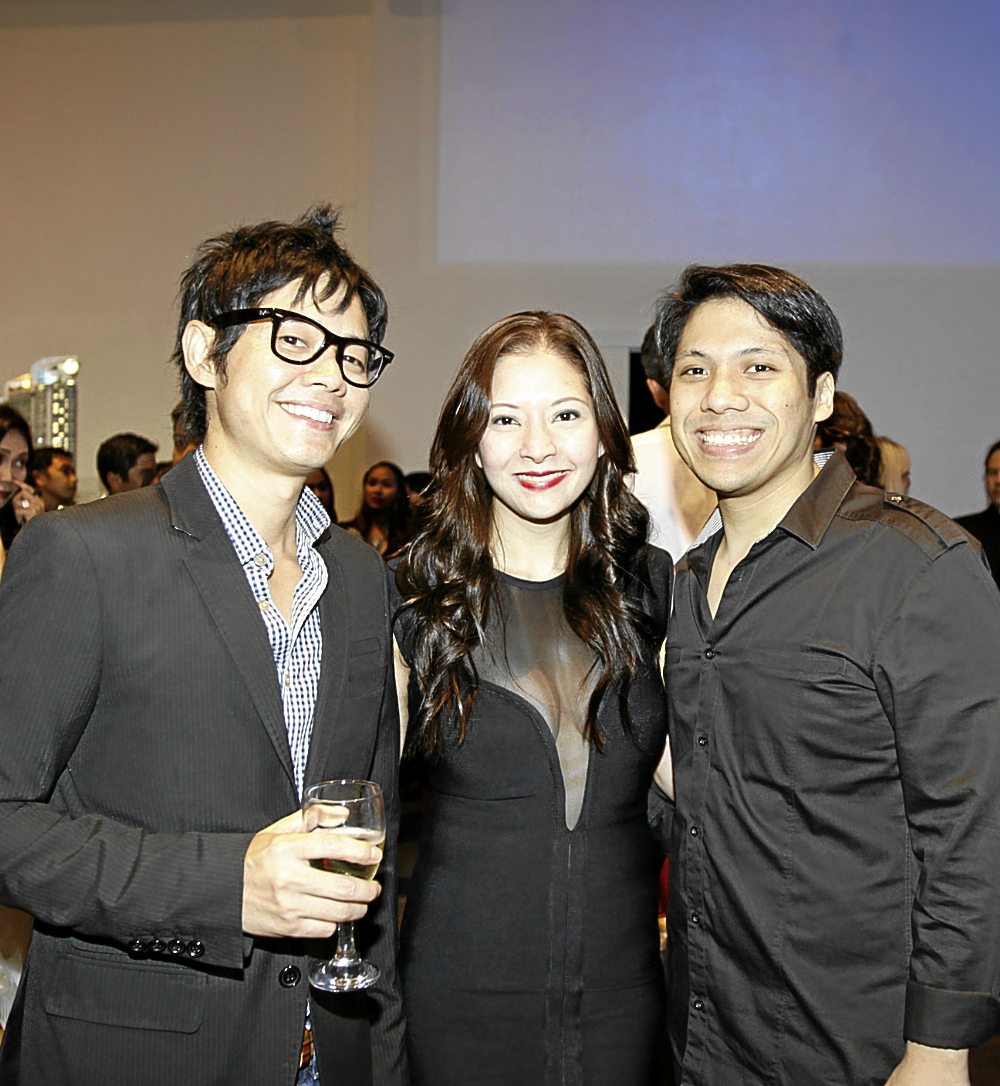
GP REYES, Cat and Carlo Antonio

The hotshot invitees enjoyed the eye-catching Acqua Iguazu showroom.

Breezing around, moi noticed Iguazu has a breathtaking multilevel amenity deck called the Cielo, and common areas that have the unmistakable imprint of Yoo, the design firm founded by top design mind Philippe Starck, natch.

British real-estate magnate John Hitchcox said in his welcome speech: “Because these spaces will be home to a lot of people, we have made our creations unique and very special. You have the privilege to see them now at the Iguazu showroom.”

“I am so very proud to present the first Yoo-inspired, Starck-designed building in your beautiful country and I am so delighted to be a part of this very exciting project,” said a smiling Philippe Starck in a video message.

Century’s hard-working COO Marco Antonio said, “Acqua is the perfect place to showcase Yoo-inspired by Starck’s sensibilities: edgy and fantastical yet functional and environmentally conscious.”

FILA endorsers Fabio Ide, Tim Yap, Georgina Wilson, Borgy Manotoc
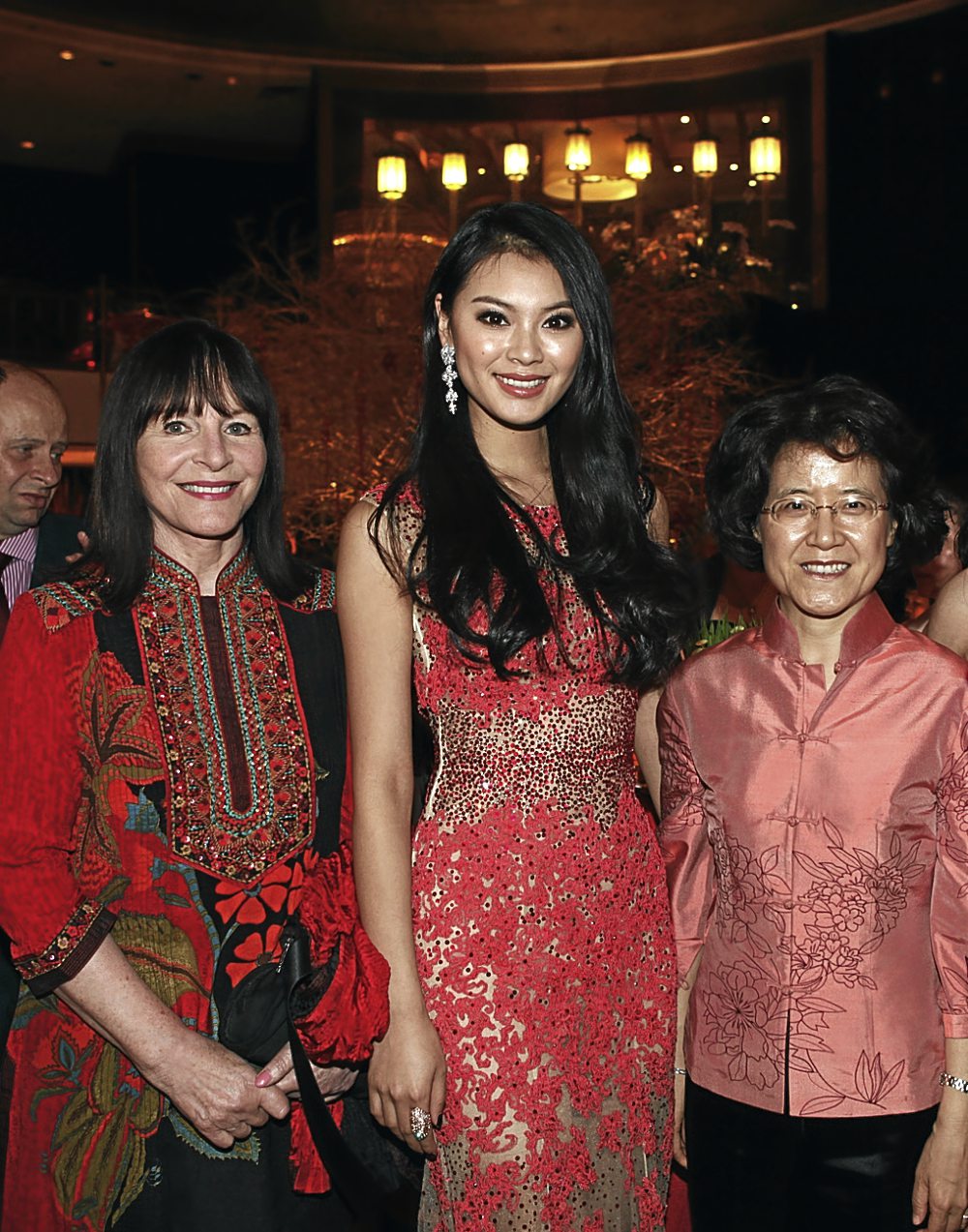
MISS World president Julia Morley, Miss World 2012Wen Xia Yu, Chinese Ambassador Ma Keqing

“Yoo inspired by Starck’s design for Acqua Iguazu will forever change our standards for residential living,” said Robbie Antonio, Century’s head of international collaborations.

Because of their exclusivity and design, the units were grabbed and reserved on the spot faster than one could bat an eyelash. Iguazu buyers were rewarded when they brought home Philippe Starck branded gifts as souvenirs. (Visit www.acqua-iguazu.com.)

Design superstar Philippe Starck’s Filipino-inspired designs

By Deni Rose M. Afinidad-Bernardo

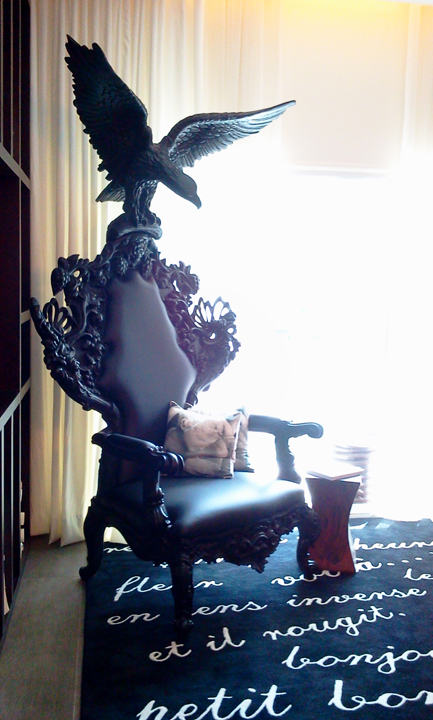
This Starck-designed chair has a Philippine monkey-eating eagle sculpture for a headrest.

For a design giant to notice the Philippines must be a dream come true, something a Filipino real estate developer just turned into a reality.
French genius Philippe Starck, considered as the world’s most influential designer, heavily incorporates Filipino accents and elements into his first and, so far, only venture in the Philippines, Acqua Iguazu, the fifth tower of Acqua Residences by top Filipino realty firm Century Properties.
“I am so very proud to present the first yoo inspired by Starck building in your beautiful country and I am so delighted to be a part of this very exciting project. Those of you who have experienced our designs before are in for another surprising, inspiring and delightful journey,” Starck says in a statement.
“We want to give our fellowmen the chance to have Starck’s design philosophy every day and not only as transient hotel guests,” enthuses Robbie Antonio, Century Properties managing director and head for International Collaborations.

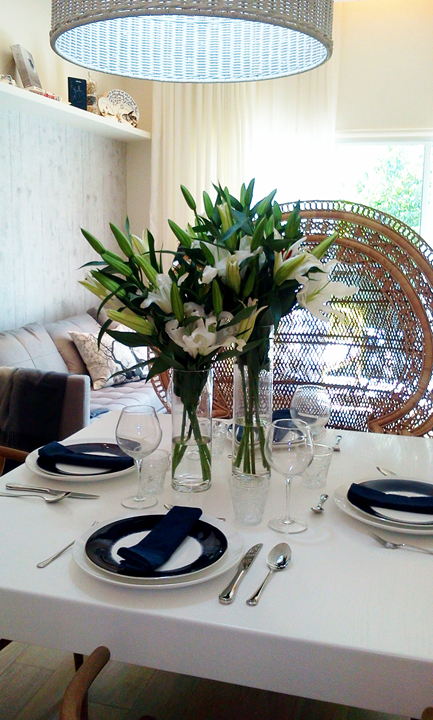
A chandelier with anative Filipino wicker body, resembling the walis ting-ting (stick broom) Filipinos use as a metaphor for unity.
The partnership began, says Marco Antonio, Century Properties co-chief operating officer and managing director, when Century met international property entrepreneur and Starck’s business partner, John Hitchcox, in Boracay.
Acqua Iguazu is the first residential Eden in their portfolio, Hitchcox said in a press conference. Starck and Hitchcox’s company, yoo, has been working with international developers for residential, hotel and commercial projects throughout Asia, Australia, Europe, Africa, North and South Americas and the Middle East. They have designed over 10,000 homes in 31 cities. Hitchcox claims to be among the pioneers in developing rundown London Soho apartments in the early ’90s.

“Today’s homes are different than what we had then because our lives now are different, so we need designers,” he espoused. “A home is a place of stability and confidence so it really needs our attention.” 

A home, for Starck, is “your own egg, where you will be very at peace to be a part of nature.”

Such is his vision for his designs for Iguazu’s lobby, walkways, elevators, rooftops, multifunctional bar, pool, library and movie rooms. Robbie says the designs will combine whimsical European flair with indigenous details such as native Filipino wicker chandeliers and an accent chair with a monkey-eating eagle sculpture as headrest. All colors will be natural, clean, pure and white, faithful to the Starck trademark.

An accent wicker dining table chair reminiscent of where Filipina beauty queens used to seat to receive their crown.
The P1.3-billion, 50-story development will have about 400 units crowned by the multi-level amenity deck, “Cielo,” chock-full of Starck’s design. The Cielo will have a gushing waterfall with a swimming pool, a bar, a DJ booth and dance floor, function room, an indoor and outdoor library, a movie room and dining area. The roof will have a cut out of a quote from the Little Prince written in Starck’s own handwriting.
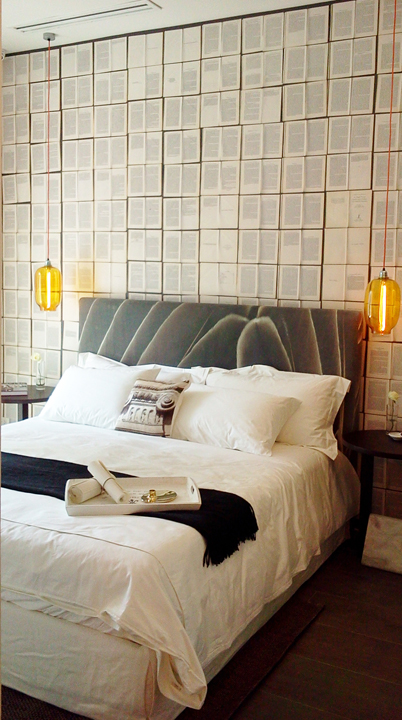
For the units, three interior design inspirations following the themes of Minimal, Nature and Culture were opened at the showroom. These will serve as reference motifs for homeowners who wish to decorate their units in true Starck style.

“The lobby will have so many magic, all things to remind you that everything is possible,” Starck assures.
From everyday products like furniture and lemon squeezers, to revolutionary mega yachts, hotels that stimulate the senses, phantasmagorical venues and individual wind turbines, Starck never stops to push the limits and criteria of contemporary design.

Nito placemats

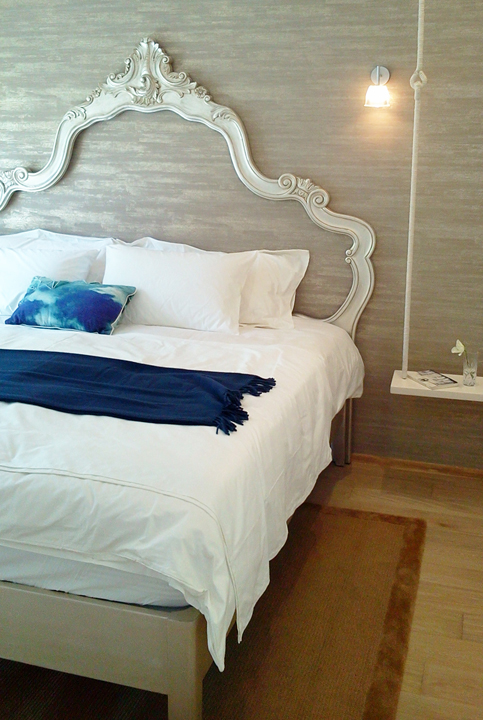
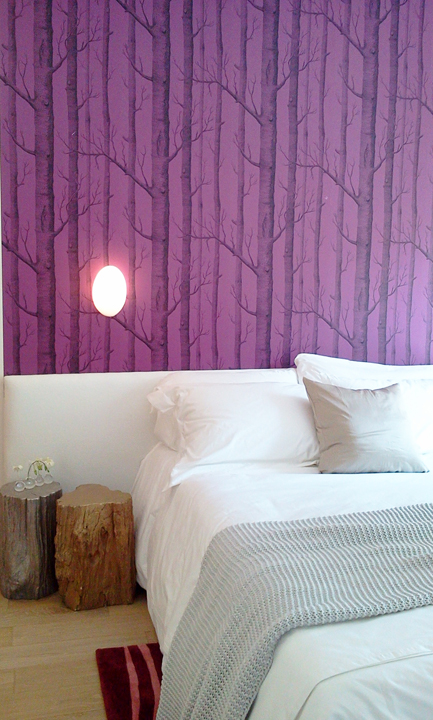
Starck infused indigenous materials like dark wood into his designs…

As well as local woodcarving, as in the frame of this bed:

Blocks of locally salvaged wood as sidetables

Starck (center) with Century Properties’ Robbie and Marco Antonio

Published in The Daily Tribune. Official link to the complete article:
http://www.tribune.net.ph/life-style/item/9733-starck-the-year-right