by Ehda M. Dagooc, The Freeman
CEBU, Philippines — Philippine property developers are looking beyond branded residential towers as competition in the premium market shifts towards hospitality, dining, wellness, entertainment and other experience-led concepts.
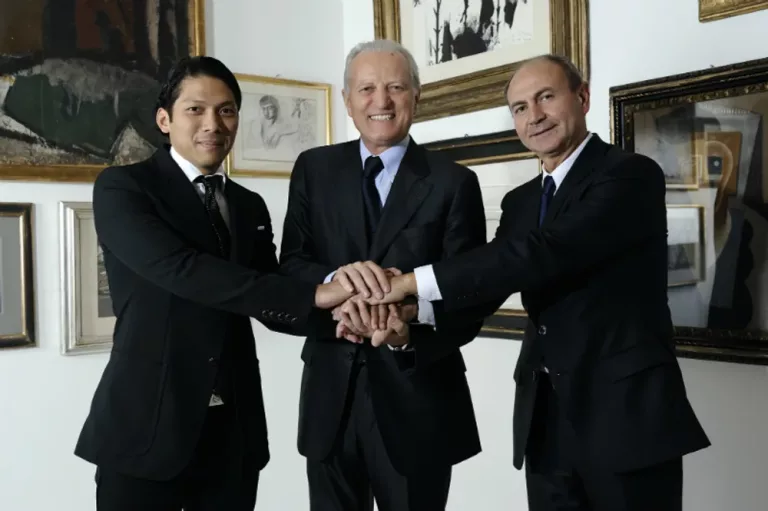
For Robbie Antonio, chief executive of Resident Branding, the Philippines offers a natural market for that evolution.
The country’s property sector he said, has already embraced branded residences, resort-style developments and internationally recognized design names.
The next opportunity, he argues, is to apply the same approach to a wider range of spaces and experiences.
“The next frontier for branded real estate may not be limited to residences,” Antonio said. “There is room to imagine how hospitality, dining, private clubs, wellness, entertainment, and lifestyle spaces can be shaped by strong brand identities.”
The proposition comes as Philippine developers increasingly compete not only on location and physical specifications but also on the lifestyle attached to a project.
In Manila and other urban centers, mixed-use developments have brought residences, hotels, restaurants, retail and leisure into increasingly integrated environments.
For developers, that creates an opportunity to use brands as part of the operating and design proposition rather than simply as a marketing tool.
Antonio has been an early participant in that shift. Through projects in the Philippines and the US, he helped introduce international architects, designers and luxury brands to residential real estate. His portfolio includes The Centurion in Manhattan, developed through Antonio Development; The Milano Residences with Versace Home interiors; Century Spire, designed with Daniel Libeskind and featuring Armani/Casa interiors; and Acqua Livingstone with MissoniHome and Acqua Iguazu with yoo inspired by Starck.
In the Philippines, projects such as Acqua and Azure helped popularize a more resort-oriented approach to residential development, bringing destination-style amenities and leisure environments into the ownership experience.
That history informs Antonio’s view that Philippine real estate can move from branded buildings towards branded environments.
From branded towers to Philippine lifestyle destinations
The opportunity is particularly relevant in a market where property development has become closely linked to retail, hospitality and leisure.
Rather than limiting a brand partnership to a building’s architecture or interiors, Antonio sees potential in using cultural and creative brands to influence how spaces are programmed and operated.
“Think of a café-lounge co-created with a leading music or culture publication, where the programming, sound, and energy are as important as the design,” he said. “Or a hotel concept co-developed with a media, fashion, or lifestyle brand where storytelling, curation, and experience define the stay, not just the room.”
Such concepts could be particularly suited to the Philippines, where developers have increasingly used mixed-use projects to combine residential, commercial and leisure uses. The next stage could involve deeper connections between those components, with brands helping define the character of a destination rather than a single building.
For Antonio, that means treating branding as part of the property’s underlying business model.
“Branding works when it shapes behavior and experience,” he said. “It has to influence how people move through a space, how they use it, and why they return to it.”
A broader market for branded property
Resident Branding’s interests now extend across luxury developments, resorts, hotels, retail and affordable housing. Antonio said future concepts could draw from media, music, fashion, wellness, entertainment and publishing.
The expansion matters in the Philippines because the branded-property model is no longer confined to the luxury residential segment. Developers are increasingly looking for differentiated concepts that can attract buyers, residents, visitors and consumers over a property’s life cycle.
That potentially changes the economics of branding.
A fashion house can shape a residence’s interiors, but a media or cultural brand could influence the programming of a hotel or restaurant. A music brand could become part of a club or lounge concept. A wellness company could inform both the physical facilities and the services delivered to residents and guests.
The challenge is making those partnerships substantive.
As more Philippine developers and international brands enter the space, consumers may become less willing to pay a premium simply for a recognizable name. The brand has to contribute to the experience, while developers must ensure that the concept survives beyond the launch campaign.
“Branded developments are not new,” Antonio said. “The next step is immersion — where hospitality, dining, wellness, and entertainment are not add-ons, but part of the core idea.”
The Philippine test
The evolution is also changing what premium property means in the Philippine market.
Location, floor area, finishes and investment potential remain important considerations, but developers are increasingly competing over the quality of the environment surrounding the property — from restaurants and wellness facilities to social spaces, cultural programming and hospitality.
That puts a higher burden on branded developments. A successful project must deliver design credibility, operational consistency and cultural relevance, rather than simply attaching a global name to a building.
“The market is becoming more sophisticated,” Antonio said. “People can tell when something is just a name, and when it is a real experience. The challenge is to build concepts that feel authentic, useful, and lasting.”
For Antonio, the next phase of Philippine branded real estate is therefore less about adding another name to a tower and more about creating destinations with their own identities.
The opportunity is to turn the country’s established appetite for branded residential development into a broader ecosystem of hospitality, dining, wellness, entertainment and culture — with real estate serving as the platform on which those experiences are built. — (FREEMAN)