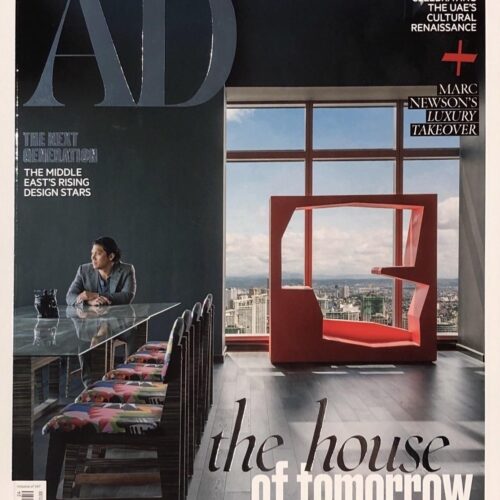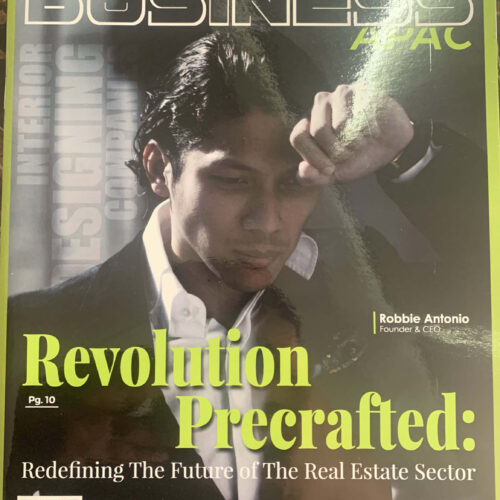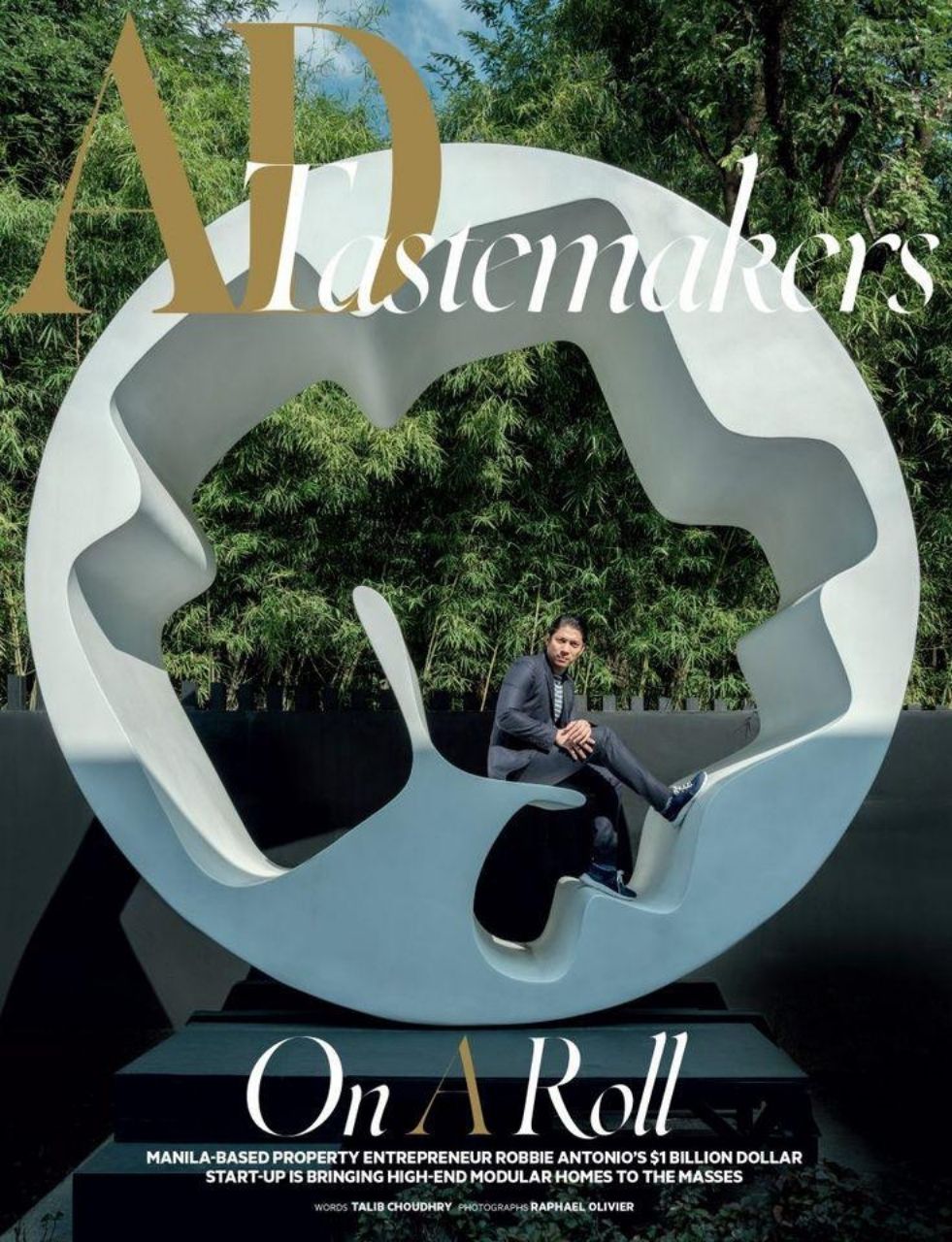
In the Architectural Digest Middle East feature titled “On A Roll,” Robbie Antonio is highlighted as a visionary “Tastemaker” who is effectively bridging the gap between elite architectural prestige and high-tech industrial efficiency. The article underscores his departure from traditional, capital-heavy real estate development to lead Revolution Precrafted, which the magazine frames as a global disruptor aiming to “democratize design.” By collaborating with a staggering roster of over 80 “Revolutionaries”—including Pritzker Prize legends like Zaha Hadid, Jean Nouvel, and Rem Koolhaas—Antonio has transformed the concept of the home into a transportable, collectible, and branded asset. The highlight of the piece focuses on his “asset-light” business model, which allows these world-class designs to be delivered to landowners globally in as little as 90 days, essentially creating an “IKEA for the elite” that appeals to both luxury collectors and mass-market developers. Ultimately, the feature presents Antonio as a pioneer who uses his deep roots in art collecting and luxury branding (having previously partnered with Versace, Armani, and Trump) to disrupt the global housing market, making high-impact architecture a ubiquitous and accessible global commodity.
The Architectural Digest Middle East feature prominently showcases two of Revolution Precrafted’s most iconic prototypes, both of which debuted at Design Miami:
1. The “Volu” Dining Pavilion by Zaha Hadid & Patrik Schumacher
Designed as a “neofuturistic piece of art,” this pavilion is a masterclass in computational design and lightweight engineering.
-
Design Concept: Shaped like an open clam shell or a giant mushroom, the structure features a continuous, organic silhouette guided by “topology optimization”—a process that removes unnecessary material to create the lightest possible stable design.
-
Structure: It consists of a series of structural bands that collect at a central spine and expand overhead to form a canopy. The floor panels mirror the irregular, laser-cut patterns of the roof.
-
Function & Specs: It is a 20-square-meter (approx. 215 sq ft) space designed for high-end alfresco dining. It can accommodate a custom circular table and seating for up to 10 guests.
-
Materials & Price: Built from wood, stainless steel, and aluminum, it was produced in a limited edition of 24 units, originally priced at approximately $480,000.
2. The “Armadillo” Tea Pavilion by Ron Arad
Inspired by the anatomy of its namesake animal, this pavilion offers a modular and versatile “place of reflection”.
-
Design Concept: The structure is composed of five overlapping, molded shells that resemble the protective plates of an armadillo. It is open on both ends to maintain a fluid connection with the surrounding landscape.
-
Modularity: Its primary appeal is its flexibility; the shells are mechanically fixed with visible brass screws and bronze brackets, allowing owners to expand, subtract, or reconfigure the unit to fit their space.
-
Function & Specs: The base model covers roughly 18 to 20 square meters and is designed to function as an informal garden enclosure, playroom, or meditation spot.
-
Materiality: Arad designed it to be used both indoors and outdoors. For outdoor use, it is available in durable PVDF-coated timber composite, while indoor versions use oiled hardwood-veneered plywood.
Other notable “starchitect” collaborations mentioned in the AD feature’s context include Sou Fujimoto’s “Infinity Ring” (a continuous strip of inhabitable space) and Ben van Berkel’s “Ellipsicoon” (a woven, cocoon-like retreat).